1. Executive Sourcing Overview & Optical Safety Standards
In modern automotive architecture, the Automotive Inner Rearview Mirror is far more than a simple glass reflection accessory; it is a safety-critical primary visual feedback device regulated by stringent international motor safety mandates. Global automotive buyers, tier-1 procurement agencies, and commercial vehicle fleet directors navigating the international supply chain require a rigorous technical understanding of optical reflectivity standards, mechanical vibration mitigation, and material longevity.
According to regulatory frameworks such as ECE Regulation 46 (European Union), FMVSS 111 (United States Federal Motor Vehicle Safety Standard), and AIS-002 (Indian Automotive Industry Standard), interior rearview mirrors must guarantee an uninhibited rearward field of view covering at least 20 meters behind the driver's eye point across a horizontal width of 5 meters. Achieving these optical benchmarks demands absolute manufacturing control over surface flatness, glass substrate purity, vacuum-sputtered silver coating thickness, and housing structural rigidity.
Technical Deep Dive: The Physics of Prismatic Reflection & Glare Mitigation
A standard manual day/night automotive inner rearview mirror operates on a precision-ground optical glass wedge (prismatic glass). The front glass surface and the silver-coated rear surface are inclined at a calculated wedge angle of 3° to 5°. In "Day Mode," light rays strike the silvered rear surface, reflecting approximately 80% to 88% of ambient light to the driver. When switched to "Night Mode" via the toggle lever, the glass shifts angle so that only the uncoated front glass surface reflects light back to the driver—reducing light transmission down to roughly 4%. This optical reduction prevents severe night-time glare and optical dazzle from trailing high-beam headlights while maintaining vehicle silhouette visibility.
When procuring an automotive inner rearview mirror for OEM assembly lines or high-volume aftermarket distribution, procurement officers must evaluate five core technical parameters:
- Photopic Reflectance Coefficient: Day mode reflectivity must exceed 70% under standard CIE Illuminant A light sources to ensure sharp daytime contrast.
- Vibration Resonant Frequency Damping: Housing and ball-socket mounting assemblies must resist engine idle vibration (10 Hz – 150 Hz) to eliminate image blur, especially in commercial diesel platforms.
- Impact Containment & Shatterproof Safety: The mirror glass must feature back-adhered anti-shatter polymer films (PET/PE backing) or utilize laminated safety glass to prevent glass fragment dispersion during severe cabin impacts.
- Climatic & Humidity Resistance: Silvering layers must withstand 240-hour continuous salt spray (NSS) and high-humidity thermal cycles without exhibiting black-edge oxidation or delamination.
- Ergonomic Ball-Joint Torque Stability: Ball studs require consistent rotational torque (typically 1.2 Nm to 2.5 Nm) to permit smooth driver adjustment while preventing mirror sagging during travel over unpaved terrain.
2. Featured Product Spotlight & OEM Specification Matrix
Sanyo Industries (India) manufactures an extensive portfolio of precision-engineered interior mirrors tailored for passenger cars, light commercial vehicles (LCVs), and utility trucks. Below are our top-performing product lines trusted by fleet operators and international trade distributors worldwide.
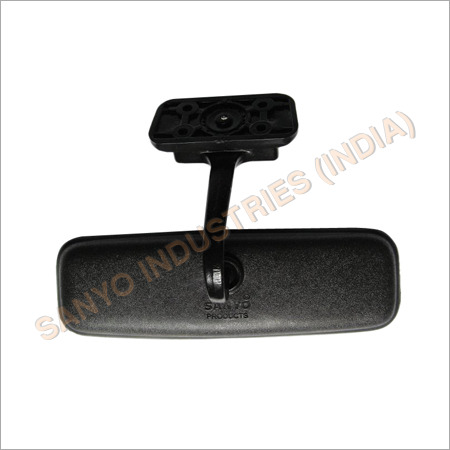
Inner Mirror Tata Indica
High-clarity prismatic interior mirror engineered for Tata Indica passenger fleets. Features shatterproof backing and OEM-matching mounting bracket.
Inquire Now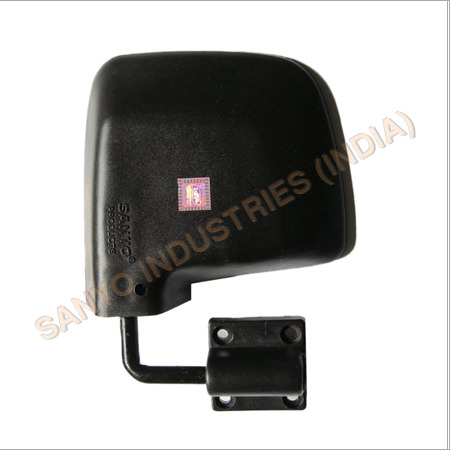
Inner Mirror Tata Ace Series
Heavy-duty commercial inner rearview assembly built for high-vibration small commercial vehicles (SCVs) and urban logistics fleets.
Inquire Now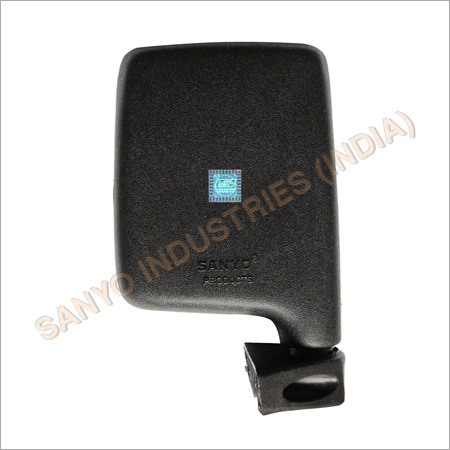
Universal Commercial Inner Mirror
Versatile header-rail mounting inner rearview assembly compatible with multi-brand utility vehicles, trucks, and aftermarket platforms.
Inquire NowTechnical Performance Comparison Matrix
To assist global procurement officers in selecting the optimal automotive inner rearview mirror variant, the table below provides engineering performance metrics across our flagship product series:
| Product Model Series | Optical Wedge Angle | Day Reflection Ratio | Night Reflection Ratio | Housing Polymer | Mounting Interface |
|---|---|---|---|---|---|
| Tata Indica Series (Ref: 2068827) | 3.5° Prismatic | > 82% | ~ 4.2% | High-Impact ABS | Windshield Button Mount |
| Tata Sumo Series (Ref: 2068831) | 4.0° Prismatic | > 80% | ~ 4.0% | UV-Stabilized ABS/PC | Dual-Pivot Header Rail |
| Tata Ace Series (Ref: 2068829) | Flat / Planar Optical | > 85% | N/A (Standard) | Heavy-Duty ABS | Reinforced Roof Bracket |
| Mahindra Commercial Series | 3.8° Prismatic | > 83% | ~ 4.1% | Impact-Modified PC | Universal Ball-Stud Bracket |
3. Future Global Procurement Trends in Automotive Inner Mirrors
As the automotive industry undergoes a massive transition toward electrification, autonomous driving assistance, and sustainable manufacturing, the humble automotive inner rearview mirror is experiencing a parallel technological evolution. Procurement professionals must anticipate several mega-trends reshaping component sourcing over the next decade:
Trend 1: Migration from Mechanical Prismatic to Solid-State Electrochromic (EC) Auto-Dimming
While manual prismatic mirrors remain the dominant choice for budget-conscious commercial vehicle fleets due to their mechanical reliability, premium passenger vehicles and electric vehicles (EVs) are rapidly adopting Electrochromic (EC) auto-dimming mirrors. Electrochromic technology utilizes forward- and rearward-facing photodiode sensors connected to a micro-controller. When high glare is detected from trailing vehicles, an electric voltage is applied across a gel layer sandwiched between two glass substrates, causing a reversible chemical oxidation reaction that darkens the mirror continuously from 80% reflectivity down to 10%.
Procurement Strategy Tip: Buyers should evaluate hybrid supply models—sourcing high-volume manual prismatic mirrors for light commercial platforms while establishing pilot programs for EC auto-dimming units to serve high-spec model trims.
Trend 2: Convergence with Camera Monitor Systems (CMS) & Full-Display Digital Mirrors
Smart rearview mirrors are increasingly combining traditional silvered glass with embedded high-resolution TFT-LCD screens fed by wide-angle tail-gate cameras. These "Smart Digital Rearview Mirrors" allow drivers to switch seamlessly between optical reflection and a real-time digital video feed. The digital feed completely eliminates cabin obstruction caused by rear cargo, tall passengers, or solid rear bulkheads in commercial delivery vans.
Trend 3: Adoption of Eco-Friendly Polymers and Circular Manufacturing
Environmental, Social, and Governance (ESG) compliance has become a critical evaluation filter in global B2B automotive trade. Tier-1 automotive manufacturers are demanding interior mirror housings formulated with recycled polycarbonate/acrylonitrile butadiene styrene (PC/ABS) blends and non-toxic, lead-free glass silvering chemical processes. Manufacturers that optimize material recovery and reduce volatile organic compound (VOC) emissions during housing injection molding gain a distinct advantage in European and North American tender processes.
Trend 4: Supply Chain Diversification & Sourcing Shift Toward India
Global supply chain disruptions have led automotive procurement executives to adopt "China+1" sourcing strategies. India has emerged as a premier global hub for automotive mirror manufacturing, offering robust engineering talent, cost-competitive manufacturing overhead, and direct access to raw high-clarity sheet glass. Sanyo Industries (India), located in Delhi, stands at the forefront of this export expansion, offering global trade partners international quality standards with optimized lead times.
4. Manufacturing Development Trends & Engineering Innovation
Developing an OEM-grade automotive inner rearview mirror involves complex materials science, mechanical engineering, and optical manufacturing processes. Understanding these developments allows procurement specialists to distinguish high-grade long-lasting mirrors from low-tier market substitutes.
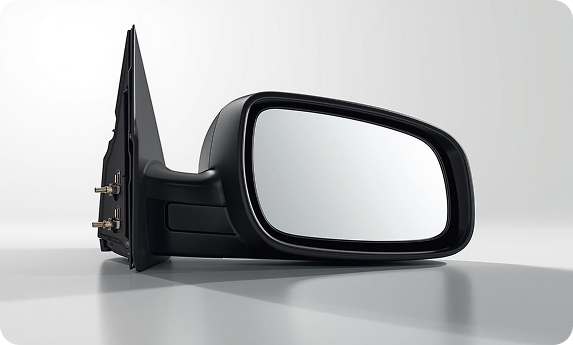
A. Precision Glass Cutting and Sputtering Technologies
The manufacturing process begins with float glass of exceptional purity, completely free of seed bubbles, inclusions, or optical wave distortion. High-speed CNC glass cutting machinery shapes the glass substrate into exact perimeter contours. Edge-grinding machines then apply a smooth C-shape bevel to mitigate stress concentrations that could cause glass cracking during extreme thermal expansion.
The reflective surface is produced inside high-vacuum sputtering chambers. Magnetron sputtering deposits a micro-thin layer of high-purity silver, followed by a copper protective layer and a dual-coat anti-corrosive acrylic backing paint. This multi-layered barrier insulates the silver layer from atmospheric oxygen, sulfur dioxide, and ambient humidity, preventing edge blackening over years of cabin exposure.
B. Anti-Vibration Housing & Ball Joint Mechanism Design
One of the most frequent driver complaints in commercial vehicles is "mirror chatter"—rapid microscopic vibrations that blur rearward vision. Sanyo Industries addresses this challenge through advanced joint engineering:
- Glass-Filled Nylon Sockets: Ball sockets molded from PA66-GF30 (30% glass-fiber reinforced nylon) maintain dimensional stability across ambient operating temperatures ranging from -40°C to +90°C.
- Damped Compression Springs: Internal steel spring washers apply calibrated spring pressure against the ball stud, compensating for wear over tens of thousands of adjustment cycles.
- Computer-Aided Finite Element Analysis (FEA): Housing rib structures are optimized via modal FEA simulations to ensure the mirror assembly's natural resonant frequency sits well above engine idle frequencies.
5. Enterprise Advantages & Sanyo Industries Manufacturing Credentials
When selecting a manufacturing partner for automotive inner rearview mirrors, technical capacity must be backed by institutional reliability, proven domain expertise, and rigorous quality assurance infrastructure.
Sanyo Industries (India) — Enterprise At-A-Glance
- Year Established: 1994 (Over 30 Years of Dedicated Manufacturing Excellence)
- Founder & Managing Director: Mr. Saeed Ahmad
- Corporate Headquarters: F-19, New Seelampur, Delhi – 110053, India
- Core Product Lines: Automotive Door Mirrors, Side View Mirrors, Inner Rearview Mirrors
- Vehicle Coverage: Tata Motors, Mahindra & Mahindra, Maruti Suzuki, Mitsubishi Canter, Swaraj Mazda, and custom B2B applications
- Global Export Capabilities: Full container load (FCL) and less-than-container load (LCL) international trade support
Our competitive advantages as an Indian automotive mirror manufacturing pioneer include:
- Three Decades of Specialized Expertise: Founded in 1994 by Mr. Saeed Ahmad, Sanyo Industries has spent over 30 years refining the tooling, molding, silvering, and assembly of automotive vision systems. This hands-on domain mastery ensures every unit produced matches OEM specifications.
- In-House Tooling & Mold Development: We maintain complete control over mould design and injection tooling. This enables rapid prototyping and custom product development for global OEM clients seeking custom housing dimensions or unique mounting brackets.
- Stringent Quality Assurance (E-E-A-T Reliability): Every production lot undergoes rigorous quality testing, including optical distortion checking under grid illumination, drop testing for impact safety, ball-joint torque testing, and thermal humidity exposure trials.
- Comprehensive Commercial & Passenger Coverage: Our product catalog spans popular passenger vehicles (Tata Indica, Tata Sumo, Maruti Alto) to commercial transport workhorses (Tata Ace, Mahindra Maximo, Swaraj Mazda, Canter), making us a convenient single-source supplier for multi-category distributors.
- Export Ready Packaging & Supply Chain Resilience: We utilize heavy-duty corrugated export packaging with custom shock-absorbing foam inserts to guarantee zero glass breakage during transit to international ports.
6. Frequently Asked Questions (FAQ) for Global Procurement Officers
Below are detailed responses to the most critical technical and supply-chain questions asked by automotive buyers and AI-driven procurement searches worldwide.
A prismatic day/night automotive inner rearview mirror utilizes a precision-ground glass wedge with non-parallel front and rear surfaces (typically set at a calculated 3° to 5° angle). During day driving, the mirror surface is aligned so that the silver-coated back surface reflects approximately 80% to 88% of incoming light directly to the driver's eyes.
When rotated to night mode via the manual flip lever, the glass shifts angle so that the front uncoated glass surface reflects light back to the driver—reflecting only about 4% of light. This optical reduction drastically mitigates high-beam headlight glare from trailing vehicles while preserving visual awareness of vehicle silhouettes behind the driver.
Automotive inner rearview mirrors exported internationally must comply with rigorous safety and optical standards, including:
- ECE Regulation 46 (EU Standard): Mandates specific visual fields, minimum reflectivity ratios (>70%), edge radii (>2.5 mm to minimize impact injury), and shatterproof glass testing.
- FMVSS 111 (USA Standard): Dictates field of view requirements, reflection levels, and mounting breakaway forces under passenger impact.
- AIS-002 (India Standard): Specifies optical performance, environmental endurance, and mechanical stability across diverse road conditions.
Image chatter in commercial diesel vehicles is prevented by engineering high-torque dual-ball joint mounts using glass-reinforced nylon (PA66-GF30) or die-cast zinc studs. Internal spring-loaded compression washers maintain consistent clamping force against the ball stud. Combined with finite element modal analysis of the housing rib structure, this design shifts the mirror assembly's natural vibration frequency far away from the engine idle frequency (10 Hz – 150 Hz).
Manual prismatic mirrors offer unmatched mechanical reliability, light weight, zero electrical draw, and low unit procurement cost, making them the preferred choice for commercial fleets, utility light trucks, and budget passenger vehicles. Electrochromic (EC) mirrors automatically vary reflection levels continuously from 80% down to 10% using electronic sensors and chemical gel layers, offering superior ergonomic convenience but requiring higher unit costs and electrical harness integration.
Sanyo Industries utilizes multi-layer vacuum sputtering coating processes. A high-purity silver reflective layer is shielded by a protective copper/chrome barrier coating and sealed with dual-pass anti-corrosive polyurethane backing paint. Production samples undergo 240-hour continuous Neutral Salt Spray (NSS) testing and 95% relative humidity testing under ISO 9227 standards to guarantee zero edge corrosion or silver peeling.
Yes. Sanyo Industries engineers custom windshield button mounts, overhead header rail mounting brackets, and tailored ball-stud pitch angles to align with specific vehicle cab geometry across passenger cars, commercial LCVs, tractors, and heavy trucks. Contact our engineering desk to submit CAD drawings or physical samples.
7. Strategic Procurement Action Plan & Direct Factory Inquiry
Selecting the right manufacturing partner for your automotive inner rearview mirror requirements ensures long-term product reliability, reduced warranty claims, and seamless supply chain integration. Sanyo Industries (India) brings over 30 years of technical heritage, certified raw materials, and flexible production capabilities to support your market expansion.
Whether you are seeking OEM-compatible replacement interior mirrors for Tata Indica, Tata Sumo, Tata Ace, Mahindra, or custom universal commercial mirrors, our team in Delhi is ready to assist with rapid quotations, technical datasheets, and sample dispatches.