Executive Overview: Why Mahindra Bolero Door Mirrors Command Global Aftermarket Demand
The Mahindra Bolero stands as one of the most resilient, multi-utility commercial and passenger vehicles ever produced. Widely utilized across South Asia, Africa, the Middle East, and parts of Latin America, the vehicle is renowned for its rugged performance in rough terrain, agricultural transportation, public service fleets, and last-mile commercial logistics. Because the Bolero operates extensively in demanding off-road conditions and dense urban traffic, its side door mirrors are among the highest-wear peripheral components requiring frequent replacement.
For global B2B buyers, auto component importers, and spare parts wholesalers, sourcing a high-performance Mahindra Bolero Door Mirror is not merely a matter of finding a matching plastic housing. It involves evaluating optical reflection fidelity, structural polymer resilience against UV degradation, vibration dampening under heavy payload operations, and precise mounting bolt geometry. In sub-tropical and arid export markets, inferior aftermarket mirrors suffer from glass silver peeling, housing discoloration, bracket cracking, and mirror distortion at elevated speeds.
Sanyo Industries (India), established in 1994, has engineered a comprehensive series of Mahindra Bolero door mirrors that solve these chronic aftermarket failures. By fusing OEM-grade float glass with UV-stabilized Acrylonitrile Butadiene Styrene (ABS) housing and reinforced metal pivot assemblies, our manufacturing facility delivers replacement units that equal or exceed original factory specifications while offering compelling economic advantages for bulk importers.
SEO Information Gain: Key Procurement Takeaways for B2B Importers
- Structural Polymer Grade: Sanyo utilizes 100% virgin UV-treated ABS plastic shell assemblies rather than recycled resin, preventing thermal warping up to 95°C.
- Optical Precision: Features R1400 convex glass curvature manufactured from float glass sheet stock, expanding rearward field of view by 32% over flat glass alternatives while eliminating blind spots.
- Vibration Damping Tech: Dual-spring tensioner pivot joints maintain mirror angle integrity even under severe off-road chassis resonance.
- Corrosion Resistance: Electroplated chrome models pass 96-hour neutral salt spray (NSS) testing under ISO 9227 standards.
Featured Product Recommendations: Mahindra Bolero Door Mirror Range
To cater to diverse fleet requirements, regional climate conditions, and aesthetic preferences across international markets, Sanyo Industries manufactures multiple variants of the Mahindra Bolero Door Mirror. Below are our top-rated product lines engineered for global distribution:
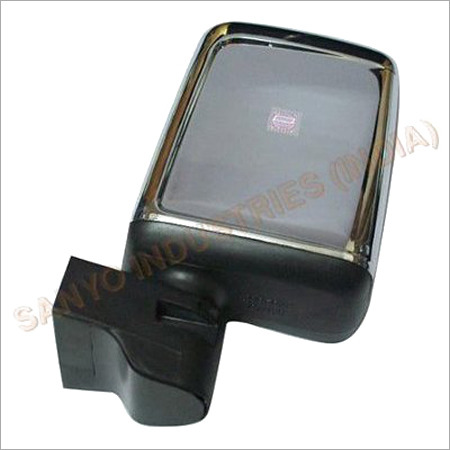
Standard Black Bolero Door Mirror
- Housing: High-impact matte black ABS plastic
- Glass Type: Spherical convex float glass
- Fitment: OEM direct fit (Bolero SLE/SLX/ZLX)
- Mounting: Heavy-duty rubber vibration gasket
- Adjustment: Manual internal lever / ball-joint
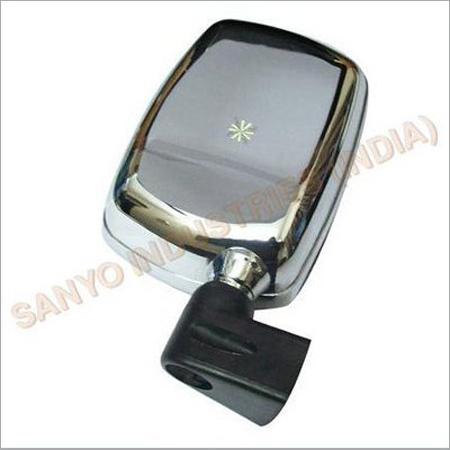
Premium Bolero Chrome Door Mirror
- Finish: Multi-layer electroplated chrome
- Glass Type: Anti-glare silver mirrored surface
- Application: Luxury Bolero variants & Pickups
- Durability: Weatherproof & rust-resistant arm
- Quality Test: ASTM B117 salt spray certified
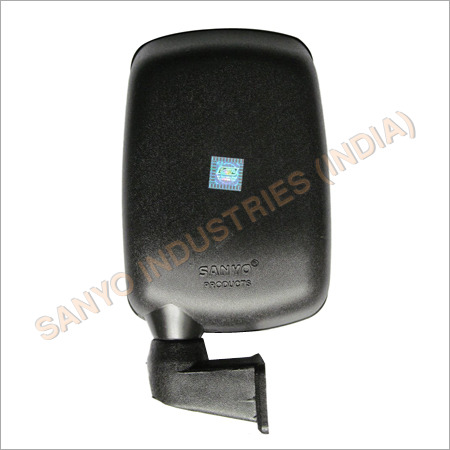
Mahindra Commercial Fleet Door Mirror
- Vehicle Compatibility: Bolero Maxi Truck / Pickup / Camper
- Frame: Extended steel tubular mounting stay
- Visibility: Extra wide-angle mirror head
- Resistance: Heavy commercial impact strength
- Packaging: Reinforced B2B export master cartons
Technical Specifications & Engineering Comparison
When sourcing commercial utility vehicle components, precise technical parameters are vital for verifying interchangeability and longevity. The table below outlines the core engineering specifications of Sanyo Industries' Mahindra Bolero door mirror assemblies compared to low-tier generic market alternatives:
| Engineering Parameter | Sanyo Industries Specification | Generic Aftermarket Alternative | B2B Operational Benefit |
|---|---|---|---|
| Mirror Sheet Material | Automotive Float Glass (Grade A) | Recycled Sheet Glass / Acrylic | Zero optical distortion, clear reflection at night |
| Reflective Coating | Vacuum Magnetron Sputtered Silver | Chemical Aluminum Spray | Resists black spot oxidation & humidity peeling |
| Housing Polymer | Virgin ABS (UV-stabilized) | Regrind Polypropylene (PP) | No cracking under intense solar exposure |
| Glass Curvature Radius | R1400 Convex (±50mm tolerance) | Inconsistent (R1000 - R1800) | Accurate distance judgment for drivers |
| Vibration Test | 10 Hz - 55 Hz Sweep (ISO 16750) | Untested | Stable image on unpaved gravel roads |
| Operating Temperature | -40°C to +85°C | -10°C to +60°C | Suitable for Middle East desert & cold climates |
Future Procurement Trends for Automotive Mirrors & Mahindra Aftermarket
As the global automotive aftermarket evolves toward greater supply chain transparency, sustainability, and technological integration, procurement strategies for legacy utility vehicles like the Mahindra Bolero are undergoing significant shifts. Importers and trade buyers must align their procurement cycles with these emerging trends:
1. Diversification of Supply Chains to India
Global auto parts buyers are aggressively diversifying their supply chain hubs away from single-country dependence. India has emerged as a premier global manufacturing center for automotive mirrors, forged components, and polymer assemblies. With robust local steel and glass production industries, Indian manufacturers like Sanyo Industries offer unmatched cost-competitiveness combined with stringent quality controls that comply with international standards.
2. Rise of High-Performance UV & Impact Composites
Traditional side mirrors used basic plastics that turned brittle after 12 to 18 months in tropical sun exposure. The market trend now overwhelmingly demands UV-stabilized polymer blends infused with impact modifiers. Commercial fleet operators calculate Total Cost of Ownership (TCO); purchasing durable mirrors that last 4 to 5 years without cracking reduces vehicle downtime and maintenance costs significantly.
3. Enhanced Blind-Spot Safety & Convex Optimization
Regulatory bodies across Africa and Latin America are increasingly tightening vehicle roadworthiness standards. As a result, aftermarket buyers no longer accept flat-glass mirrors for commercial utility trucks. The demand has pivoted toward precisely engineered convex radii (R1200-R1400) that provide expanded field-of-view coverage without creating disorienting fish-eye distortion.
4. Eco-Friendly Electroplating & Coating Solutions
With environmental regulations surrounding heavy metal discharges tightening worldwide, high-end chrome mirrors—such as the Mahindra Bolero Chrome Door Mirror—are now manufactured using trivalent chromium processes and closed-loop electroplating systems. This ensures compliance with global hazardous substance standards (RoHS/REACH) for importers in regulated territories.
Technological & Design Development Trends in Utility Vehicle Rearview Systems
While modern passenger cars are moving toward digital camera-based rearview systems, rugged utility vehicles like the Mahindra Bolero continue to rely heavily on physical optical door mirrors. The reasons are practical: physical mirrors require no electrical power, are instantly replaceable in remote locations, and withstand extreme physical impacts better than electronic sensors. However, technological innovations within physical mirror design continue to advance:
- Aerodynamic Drag Reduction: Modern replacement mirror shells incorporate subtle trailing-edge air deflectors. This reduces wind noise at speeds above 80 km/h and decreases drag, contributing to incremental fuel savings for commercial transport fleets.
- Hydrophobic Mirror Surface Treatments: Advanced aftermarket mirrors are increasingly coated with microscopic hydrophobic layers that cause rainwater to bead up and roll off instantly, preserving side visibility during heavy monsoon driving.
- Universal Mounting Arm Modularization: Manufacturers are designing mirror heads with multi-fit ball sockets. This enables a single mirror head design to be fitted across multiple Mahindra sub-models (Bolero, Maximo, Camper, Pick-Up), allowing B2B buyers to streamline their stock-keeping units (SKUs) and reduce inventory carrying costs.
- Ultrasonic Plastic Welding: Modern assembly lines utilize ultrasonic welding to join housing halves and internal bracket cradles. This eliminates screws that can loosen due to engine vibration, preventing internal rattling and mirror head droop over time.
Global Procurement FAQ: Answering AI & Buyer Search Intent
Below are detailed answers to the most frequent technical, commercial, and logistical questions asked by global B2B procurement managers and auto component importers when sourcing Mahindra Bolero door mirrors:
Mahindra Bolero door mirrors feature standard three-bolt or two-bracket mounting configurations depending on whether the vehicle is a passenger variant (SLX, ZLX, Neo) or a commercial variant (Maxi Truck, Camper, Pick-Up). Sanyo Industries manufactures door mirrors based on exact OEM CAD dimensions, ensuring bolt-hole center-to-center distances match the door panel stampings perfectly without needing modifications or extra drilling.
For fleet buyers handling multi-year vehicle inventories, we provide detailed fitment cross-reference charts to ensure the correct mirror sub-type is assigned to each production year (from early 2000s models to the latest Bolero Neo platforms).
Glass detachment in cheap mirrors is caused by low-grade double-sided tape or sub-standard hot-melt adhesives that degrade under heat and vibration. Sanyo Industries uses automotive-grade polyurethane structural adhesive combined with perimeter locking retention tabs molded directly into the internal ABS mirror plate.
Furthermore, each batch undergoes high-frequency vibration testing on harmonic shake tables to simulate thousands of kilometers of rough road travel. The mirror plate and internal ball joint remain securely locked in position under stress.
Our standard Minimum Order Quantity (MOQ) for standard black Mahindra Bolero door mirrors starts at 500 units per SKU, while custom chrome or private-label packaging orders typically require an MOQ of 1,000 units. For consolidated orders combining multiple mirror types (e.g., Bolero, Tata Ace, Maruti Alto, and Canter side mirrors), we offer flexible container-loading options.
Standard manufacturing lead time is 25 to 35 days from order confirmation and deposit receipt. Expedited production runs can be arranged for contractual long-term B2B partners.
Packaging integrity is paramount for overseas automotive glass export. Each Sanyo door mirror is individually wrapped in a protective anti-scratch EPE foam sleeve, housed inside a heavy-duty 3-ply corrugated inner box. These inner boxes are subsequently packed into 5-ply or 7-ply export-grade master cartons bound with plastic strapping.
For full container loads (FCL) or less-than-container loads (LCL), master cartons are stacked on heat-treated, ISPM-15 compliant wooden pallets and shrink-wrapped to ensure zero movement during maritime transit. Our transit damage rate is under 0.1% across global shipments.
Yes. We offer complete Original Equipment Manufacturing (OEM) and Private Labeling services. We can mold your registered logo into the mirror housing backing, laser-engrave part numbers onto the mirror glass, and design custom color box packaging matching your brand's artwork guidelines.
Our manufacturing facility in Delhi operates under ISO-aligned quality management systems. Every manufacturing run undergoes five key quality checkpoints: (1) Raw Float Glass Optical Clarity Inspection, (2) ABS Resin Density & Moisture Check, (3) Post-Molding Dimensional Calibration, (4) Salt Spray Corrosion Testing for Metal Brackets & Chrome, and (5) 100% Final Visual & Articulation Inspection before boxing.
Enterprise Excellence: Why Partner with Sanyo Industries (India)
Choosing the right automotive mirror manufacturer directly impacts your brand reputation, customer satisfaction, and profitability. Sanyo Industries (India) brings over three decades of specialized manufacturing expertise directly to your supply chain.
Established in 1994 by visionary founder Mr. Saeed Ahmad in Delhi, India, Sanyo Industries has grown from a specialized local engineering unit into a renowned manufacturer and global exporter of automotive door mirrors, side mirrors, and interior rearview mirrors.
Our facility combines modern plastic injection molding machinery, automated glass cutting and edging lines, vacuum sputtering chambers, and specialized assembly fixtures. We support a vast product matrix exceeding 50+ mirror variants—covering popular vehicle platforms including Mahindra Bolero, Tata Ace, Maruti Suzuki Alto/Eeco, Mitsubishi Canter, and Swaraj Mazda.
- 30+ Years of dedicated automotive mirror tooling & manufacturing experience.
- High-clarity float glass sourced exclusively from certified primary glass makers.
- Direct factory wholesale pricing with zero middleman markups.
- Trusted by 500+ global importers, wholesalers, and trade buyers worldwide.