1. Understanding the Global Demand & Search Intent for Canter Side Door Mirrors
The global light-to-medium commercial vehicle market relies heavily on robust cab-over-engine truck architectures, epitomized by the iconic Mitsubishi Fuso Canter series and its regional variants. For fleet managers, procurement officers, and aftermarket auto parts importers, securing high-quality replacement Canter side door mirrors is not merely a cosmetic maintenance priority—it is a critical safety and operational mandate.
Search queries submitted to modern AI-driven discovery engines and industrial supply portals frequently revolve around specific technical pain points:
- "How to mitigate high-speed mirror housing vibration in Canter trucks?"
- "What radius of curvature (R1200 vs R1400 convex glass) minimizes lateral blind spots for urban delivery fleets?"
- "Which housing polymer withstands high UV degradation and harsh environmental impact in tropical and desert climates?"
- "Where to source factory-direct OEM-grade Canter door mirror assemblies with direct bolt-on compatibility?"
As a specialized manufacturer operating since 1994, Sanyo Industries (India) engineered its commercial mirror product lines to resolve these core operational headaches. By utilizing high-purity float glass, multi-layer vacuum silvering, and shock-resistant ABS shell enclosures, Sanyo mirrors deliver pristine optical feedback under heavy-duty operating cycles.
💡 Information Gain Insight: Optical Physics in Heavy-Duty Side Mirrors
Unlike light passenger vehicle mirrors, a Canter side door mirror must accommodate elevated driver seating positions and wide-body freight cargo. Standard planar (flat) glass fails to capture lower blind zones along the passenger-side cab doors. Sanyo integrates dual-radius convex optics with an R1200 primary curvature, expanding lateral field-of-view by up to 38% compared to standard aftermarket mirrors without introduces image distortion along the glass periphery.
Technical Specifications Matrix: Canter Door Mirror Series
Below is a comparative technical specification grid highlighting the structural and optical parameters engineered into Sanyo's commercial vehicle door mirror line-up:
| Parameter / Feature |
Sanyo Standard Canter Mirror |
Sanyo Heavy-Duty Jumbo Canter |
Generic Aftermarket Alternatives |
| Primary Glass Curvature |
R1200 Convex / Chrome-Silver Backing |
R1400 / Dual-View Integrated Spotter |
Flat or Irregular R800 (High Distortion) |
| Reflectivity Index |
≥ 86% Photopic Reflectance |
≥ 88% Photopic Reflectance |
< 70% (Dull backing film) |
| Housing Polymer |
High-Impact Virgin ABS + UV Stabilizers |
Polycarbonate/ABS Alloy Composite |
Recycled Polypropylene (Prone to cracking) |
| Vibration Damping Ratio |
Integrated EPDM Rubber Sleeve Bushing |
Dual-Spring Tensioned Ball Mount |
Unreinforced Rigid Plastic Joint |
| Mounting Arm Diameter Fitment |
16mm / 19mm Universal Tube Clamp |
19mm / 22mm Heavy Commercial Arm |
Non-standard / Inaccurate Clamp Pitch |
| Salt Spray Corrosion Test |
96 Hours ASTM B117 Standard |
144 Hours ASTM B117 Standard |
< 24 Hours (Fast bracket rusting) |
2. The Evolutionary Path of Canter Side Door Mirror Engineering
The design of commercial truck rear-view vision systems has undergone significant technological evolution over the last three decades. Understanding this structural evolution is essential for fleet buyers aiming to optimize vehicle lifespan and reduce maintenance overhead.
Phase 1: Metal Frame & Heavy Flat Glass Era (1980s – Mid 1990s)
Early iterations of the Mitsubishi Fuso Canter side mirror relied on stamped sheet-metal outer shells housing heavy flat glass plates. While structurally rigid, these assemblies suffered from severe rust accumulation in wet climates, excessive weight causing door hinge fatigue, and a restricted field of view that created dangerous blind spots along urban delivery routes.
Phase 2: Transition to Lightweight Polymers & Convex Optics (Late 1990s – 2010s)
With advancements in automotive injection molding, manufacturers transitioned to ABS (Acrylonitrile Butadiene Styrene) plastic heads. Convex mirror curvature became standard, granting drivers wider coverage of adjacent highway lanes. However, early polymer mirrors frequently encountered UV fading, shell brittleness, and mirror head "whiplash" or loosening under diesel engine vibration.
Phase 3: Modern Aerodynamic, Multi-Radius & Sensor-Ready Assemblies (2020 & Beyond)
Modern commercial truck mirrors prioritize aerodynamic drag reduction to optimize fuel efficiency. Today's premium Canter side door mirrors feature integrated air deflector channels on the rear casing to channel airflow around side windows, reducing rainwater accumulation on the glass. Furthermore, modern fleet architectures are beginning to combine physical convex mirrors with mounting points for auxiliary blind-spot radar systems and digital side-view cameras.
Engineering Precision in Sanyo's Canter Series
At Sanyo Industries, our engineering division continuously refines the internal ribbing geometry of our Canter mirror heads. By analyzing stress points during high-velocity wind testing, we engineered a internal cross-braced structure that dampens vibration frequencies generated by 4-cylinder diesel engines.
Our mirror glass silvering process utilizes a vacuum-deposited metallic film protected by dual weather-seal paint coats, preventing silver oxidation and glass edge peeling under extreme humidity or saline coastal environments.
3. Global Procurement Trends & AI-Driven Sourcing for Fleet Operators
The global supply chain landscape for commercial vehicle spare parts is experiencing a structural realignment. Supply chain managers are actively shifting away from expensive single-source OEM channels toward validated Tier-1 and Tier-2 replacement manufacturers capable of delivering identical engineering performance at competitive price points.
Key Global Procurement Trends Driving Demand:
- Nearshoring & Diversified Sourcing: Global distributors are establishing strategic vendor partnerships in India to balance supply chain risks and minimize lead times. India's robust automotive manufacturing ecosystem offers world-class metallurgy and polymer processing capabilities.
- Total Cost of Ownership (TCO) Optimization: Fleet operators running large delivery networks (e.g., last-mile logistics, agricultural transport, construction material fleets) calculate downtime costs rigorously. A failed door mirror assembly halts vehicle dispatch due to safety compliance regulations. Sanyo's quick-replacement modular mirror assemblies allow fleet mechanics to replace damaged units in under 10 minutes.
- Demand for Standardized Universal Fitment: Importers prefer stocking Canter mirror variants that offer cross-compatibility across multiple chassis generations (Fuso FE, FG, and regional light commercial vehicle knock-offs). Sanyo's universal clamp bracket options satisfy multiple OEM fitments with a single SKU.
4. Recommended Commercial Vehicle Door Mirror Line-up
Explore Sanyo Industries' top-performing side door mirrors for commercial and passenger utility vehicles. Each product is built to rigorous quality benchmarks, backed by 30+ years of manufacturing heritage in Delhi, India.
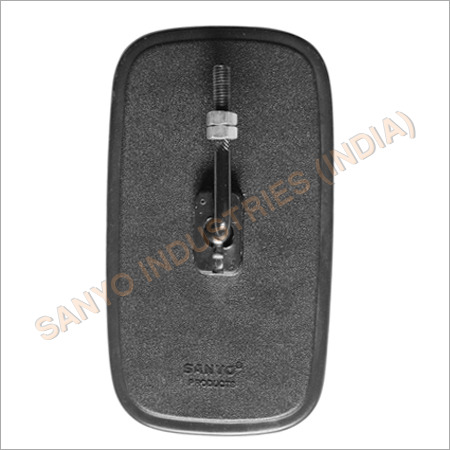
Door Mirror Canter Series
Heavy-duty side door mirror custom engineered for Mitsubishi Fuso Canter trucks. Features R1200 optical glass, high-impact ABS casing, and anti-vibration clamp brackets.
Send an Inquiry
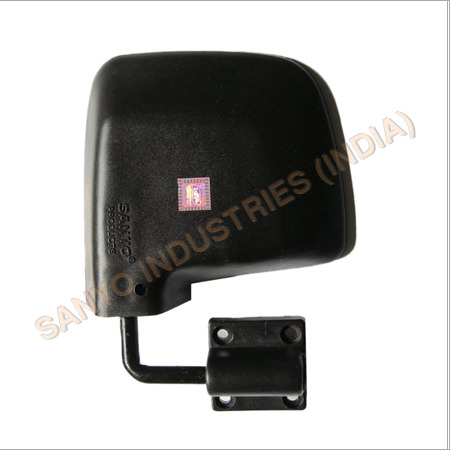
Tata Ace Side Door Mirror
Designed for India's leading mini-truck platform. Provides exceptional wide-angle vision, compact housing layout, and effortless door pillar installation.
Send an Inquiry
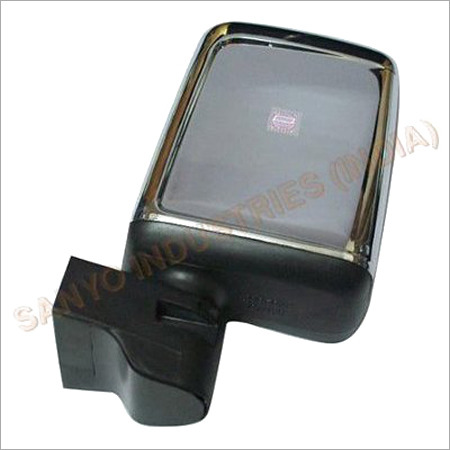
Mahindra Bolero Door Mirror
Rugged side door mirror tailored for utility vehicles operating in demanding rural and off-road conditions. Features impact-resistant casing and clear optical feedback.
Send an Inquiry
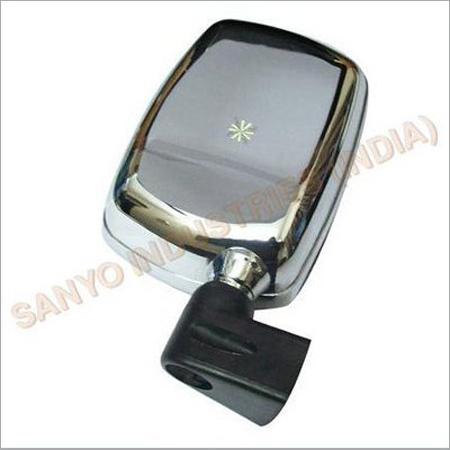
Bolero Chrome Door Mirror
Premium electroplated chrome door mirror head delivering superior aesthetic finish coupled with corrosion resistance against atmospheric pollutants.
Send an Inquiry
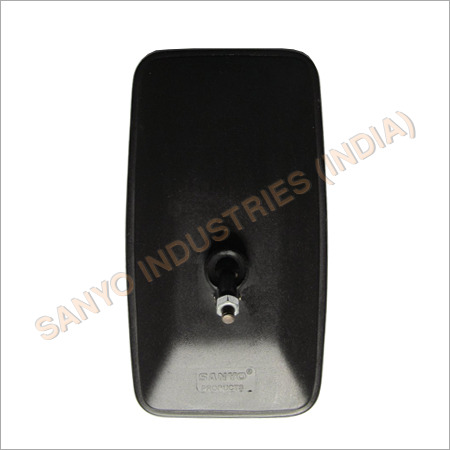
Door Mirror Swaraj Mazda
Commercial-grade mirror head designed for bus and medium truck bodies. Features wide frame coverage and shatter-resistant safety glass options.
Send an Inquiry
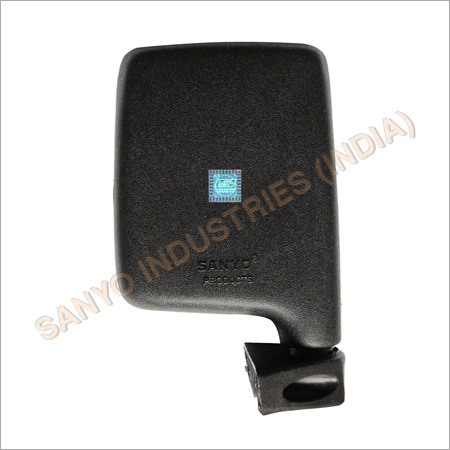
Four Wheeler Universal Door Mirror
Versatile aftermarket door mirror fitting various passenger cars and light vans. Easy manual adjustment mechanism with crisp mirror reflectivity.
Send an Inquiry
5. Why Global Importers Trust Sanyo Industries (India)
Established in 1994 by Mr. Saeed Ahmad in Delhi, Sanyo Industries (India) has evolved from a regional mirror fabricator into a prominent global supplier of automotive rear-view vision systems. Our three-decade commitment to quality manufacturing forms the bedrock of our authority and reliability (E-E-A-T).
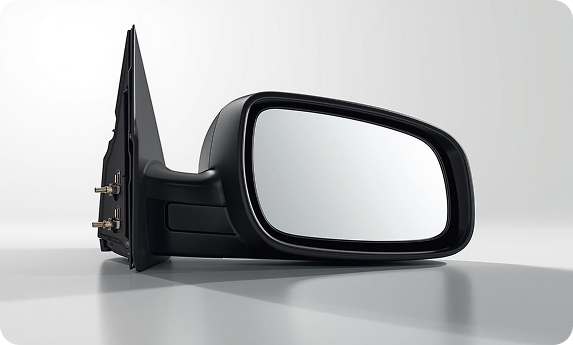
Manufacturing Expertise & Quality Assurance
Operating out of our New Seelampur facility in Delhi, Sanyo Industries conducts 100% in-house quality inspection spanning raw glass inspection, precision curved cutting, edge grinding, polymer injection molding, and final assembly torque testing.
Our Core Operational Pillars:
- Certified Premium Material Sourcing: We utilize sheet glass sourced strictly from ISO-certified float glass suppliers. Mirror backings are sealed with specialized moisture-barrier protective coatings to eliminate silver tarnishing.
- Tooling & OEM Customization: Possessing comprehensive tooling capabilities, Sanyo develops custom mold tooling for specialized commercial vehicle brackets, private label branding, and specific regional truck adaptations.
- Rigorous Testing Protocols: Every batch of Canter side door mirrors undergoes vibration endurance testing, thermal cycling shock tests (-20°C to +80°C), and optical distortion verification using digital grid projection.
- Streamlined B2B Export Logistics: With multi-layer corrugated export packaging, moisture-absorbent silica treatments, and shrink-wrapped palletization, we ensure zero breakage risk during oceanic or overland freight transit.
Partner with a World-Class Automotive Mirror Manufacturer
Looking to place a bulk OEM order or establish a regional wholesale distributorship for Canter side door mirrors? Connect directly with our sales engineering team today.
Send an Inquiry
6. Frequently Asked Questions (FAQ) for B2B Buyers & Technical Engineers
Below are detailed answers to the most common technical and procurement queries regarding Canter side door mirrors and commercial vehicle mirror sourcing:
Q1: How do I verify correct fitment for different Mitsubishi Fuso Canter chassis generations?
A: Sanyo Canter mirrors are categorized according to mounting arm outer diameter (typically 16mm or 19mm) and bolt-hole spacing on the door bracket. When submitting an inquiry, supply your truck chassis code (e.g., FE83, FE84, FG) or bracket arm dimensions so our engineering team can confirm 100% dimensional match.
Q2: What is the optical difference between convex mirror glass and flat mirror glass on commercial trucks?
A: Flat mirror glass provides 1:1 true-distance perception but limits field-of-view, leaving severe blind spots alongside wide freight bodies. Convex mirror glass (such as Sanyo's R1200 curved series) gently curves outward, capturing adjacent traffic lanes and lower curb zones essential for safe maneuverability in crowded urban settings.
Q3: How does Sanyo prevent mirror head movement or shake caused by diesel engine vibration?
A: We utilize heavy-duty internal tension springs combined with high-friction EPDM rubber socket liners within the ball-joint pivot. This design maintains selected mirror angles even when subjected to intense engine idling harmonics or rough off-road terrain.
Q4: Can Sanyo manufacture Canter side door mirrors with custom private-label branding?
A: Yes. For qualified wholesale order volumes, Sanyo offers full OEM/ODM services, including custom logo embossing on the ABS rear housing, specialized branded carton packaging, and customized part numbering.
Q5: What anti-corrosion protection is applied to the metal mounting brackets?
A: All metal clamping hardware, tubular arms, and mounting fasteners undergo multi-stage zinc plating or electro-coat powder coating, achieving over 96 hours of salt spray corrosion resistance (ASTM B117 standard).
Q6: What is the standard minimum order quantity (MOQ) and lead time for international export orders?
A: Standard export MOQ starts at 500 units per item SKU. Lead times typically range between 15 to 30 days depending on order customization requirements and shipment volume.