1. Executive Summary & Technical Architecture of Maruti Suzuki Eeco Door Mirrors
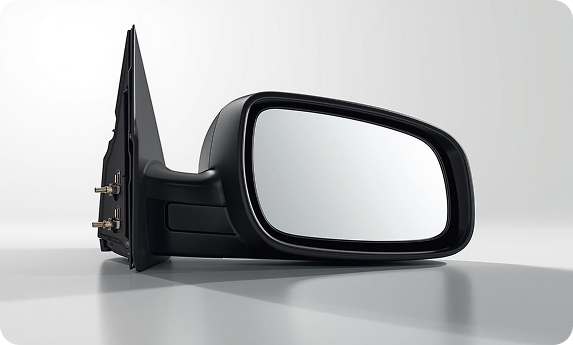
The Maruti Suzuki Eeco Door Mirror represents one of the highest-demand replacement components across South Asian, African, and Middle Eastern automotive aftermarket distribution networks. Built for a multi-utility vehicle (MUV) platform that performs dual roles as a high-occupancy passenger carrier and a heavy-duty commercial cargo van, the side mirror assembly must satisfy unique structural, optical, and environmental demands.
Unlike standard sedan rear view mirrors engineered strictly for minimal aerodynamic drag, an Eeco side door mirror requires an expanded field-of-view (FOV) coefficient, extreme resistance to mechanical vibration, and superior optical clarity. Global buyers sourcing this component face distinct challenges regarding housing fracture resistance, glass silvering degradation in high-humidity climates, and pivot tension retention over hundreds of thousands of operational kilometers.
Engineering Specifications Matrix: Maruti Suzuki Eeco Outer Rear View Mirror (ORVM)
Sanyo Industries (India) manufactures Eeco-compatible door mirrors adhering strictly to international OEM equivalence standards. Below are the structural parameters for our flagship B2B production lines:
| Engineering Parameter | OEM Benchmark Standard | Sanyo Manufacturing Specification |
|---|---|---|
| Housing Material | Virgin ABS Plastic / Polycarbonate Blend | High-Impact UV-Stabilized Acrylonitrile Butadiene Styrene (ABS) |
| Mirror Glass Radius | Convex R1200 / Flat R-Infinity | Precision-Curved Convex R1200 (Optimum Blind Spot Reduction) |
| Reflective Coating | Vacuum Aluminum / Chrome Deposition | Dual-Layer Magnetron Sputtered Vacuum Silvering with Anti-Oxidant Seal |
| Adjustment Mechanism | Manual Lever / Cable-Operated Remote | Reinforced Polypropylene Internal Pivot Gear with Anti-Wear Bushing |
| Vibration Tolerance | 10 Hz to 55 Hz (ISO 16750-3) | Zero Optical Distortion at 3.5g Peak Acceleration (Tested to 60 Hz) |
| Operating Temperature | -20°C to +80°C | Weatherproof Seal Rated -35°C to +85°C Ambient Exposure |
| Mounting Hardware | Tri-point Bracket / Bolt Pattern | Direct-Fit OEM Pattern (Zero Modification Bolt-On Installation) |
From a structural standpoint, the Maruti Suzuki Eeco outer mirror assembly consists of four critical sub-components: the main outer housing shell, the mirror plate glass backing, the rotational joint mounting bracket, and the weatherproofing rubber gasket seal. High-volume fleet operators frequently report failure points in non-standard aftermarket imports—specifically housing stress fractures around the mounting base and premature delamination of the silver coating due to moisture ingress. Sanyo Industries eliminates these vulnerabilities through automated ultrasonic welding and climate-chamber salt spray testing during manufacturing.
2. Recommended Product Configurations & Wholesale Product Recommendations
To cater to diverse buyer intents—ranging from budget-conscious fleet maintenance buyers to high-end regional auto-parts distributors—Sanyo Industries manufactures multiple tailored configurations of the Maruti Suzuki Eeco Door Mirror alongside complimentary commercial vehicle mirror solutions.
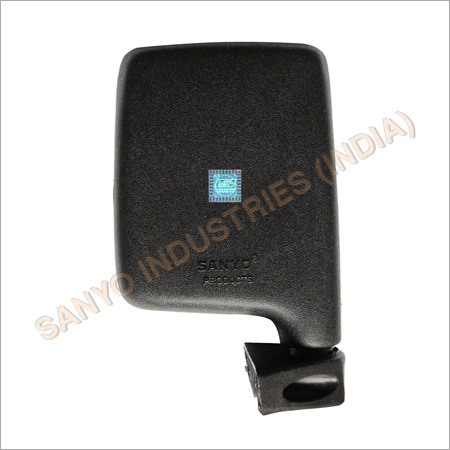
Maruti Suzuki Eeco Heavy-Duty Commercial Mirror Assembly
Reinforced ABS casing designed for commercial delivery vans experiencing harsh daily usage.
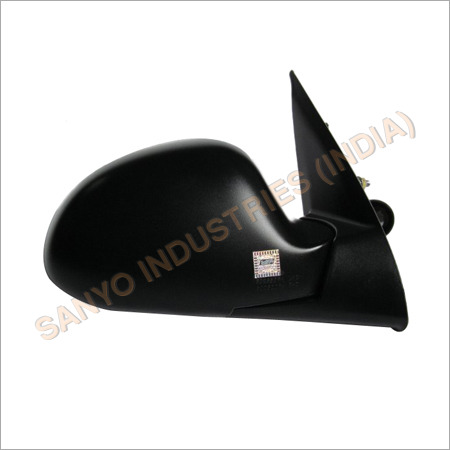
Passenger Van Manual Cable-Adjustable Side Mirror
Smooth internal control lever mechanism offering effortless driver-side perspective changes.
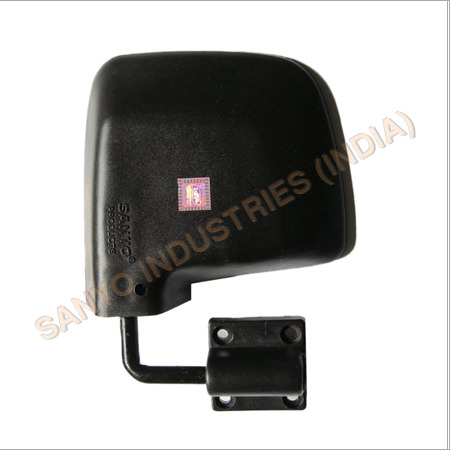
Dual-Vision Auxiliary Rear View Commercial System
Extended arm setup ideal for modified Eeco cargo box vans needing wide-angle perimeter tracking.
When selecting the appropriate product grade for global importation, buyers should evaluate three main product lines within our wholesale catalog:
- Standard Aftermarket Replacement Grade: High-volume, cost-optimized assemblies engineered for direct retail sales across spare part shops. Features standard black textured ABS housing with flat or convex mirror options.
- Fleet Heavy-Duty (HD) Grade: Engineered with a 20% thicker housing wall and reinforced steel insert plates inside the mounting foot. Designed specifically for commercial logistics operations where vehicles undergo constant stop-and-go driving and frequent minor side impacts.
- Custom OEM-Branded Assemblies: Private-label manufacturing option where Sanyo Industries customized packaging, color matching, and bracket configurations to meet proprietary regional vehicle modifications.
Need Complete Technical Data & Bulk Pricing?
Download our complete automotive door mirror catalog featuring over 50 vehicle fitments including Maruti Suzuki Eeco, Tata Ace, Mahindra Bolero, and Mitsubishi Canter mirrors.
Get Catalog3. Evolutionary Development Trends in Eeco Door Mirror Manufacturing
The manufacturing architecture of utility vehicle door mirrors has undergone significant technological evolution over the past decade. Driven by stringent global safety standards, weight-reduction mandates, and shifting consumer expectations, the modern Eeco side mirror is no longer a rudimentary piece of glass attached to a plastic frame.
A. Material Science: Transition to High-Impact Polymer Alloys
Historically, low-cost aftermarket mirrors utilized recycled poly-styrene or low-grade polypropylene. These materials suffered from rapid degradation, turning brittle and fading to grey under UV exposure within months. Today, Sanyo Industries utilizes virgin Acrylonitrile Butadiene Styrene blended with UV-inhibiting masterbatches. This ensures that the mirror housing retains its tensile strength (up to 45 MPa) and deep satin-black finish even under prolonged tropical sunlight exposure.
B. Optical Surface Precision & Vacuum Sputtering
Conventional mirror manufacturing relied on wet-chemical silvering, which was prone to micro-pinhole oxidation when exposed to coastal humidity. Modern manufacturing employs physical vapor deposition (PVD) vacuum sputtering. A multi-layer reflective stack consisting of chromium, silver, and silicon protective seals is deposited onto float glass under high vacuum conditions. This yields a mirror surface with over 88% spectral reflectivity and zero optical distortion across the entire curvature boundary.
C. Aerodynamic Noise Attenuation & Vibration Control
Commercial vehicles running at highway speeds frequently transmit harmonic engine vibrations through the A-pillar into the door mirror housing. Unoptimized mirror designs exhibit severe image blurring at speeds exceeding 60 km/h. Through computational fluid dynamics (CFD) modeling and modal vibration analysis, modern Eeco mirror assemblies incorporate internal structural ribbing and dampening bushings, keeping image blur below human visual perception limits.
4. Future Procurement & Supply Chain Dynamics (2025–2030)
As global supply chains realign to mitigate geopolitical risks and optimize freight efficiency, the procurement landscape for Maruti Suzuki Eeco spare parts is shifting rapidly. B2B buyers must anticipate several macroeconomic and technological macro-trends shaping automotive aftermarket sourcing between 2025 and 2030:
- Rise of Eeco EV Variants & Aerodynamic Redesign: With Maruti Suzuki expanding electrification across its commercial and passenger van lineups, next-generation door mirrors will incorporate lower drag coefficients to preserve battery range. Importers must align with manufacturers capable of rapidly updating tooling for streamlined mirror profiles.
- ESG Compliance & Recyclable Automotive Plastics: International trade regulations, particularly in European and Latin American markets, are mandating higher percentages of post-consumer recycled (PCR) resin and REACH-compliant chemical processes. Sanyo Industries is already integrating eco-friendly molding protocols to support green procurement requirements.
- Nearshoring & Direct Factory Sourcing from India: Global buyers are increasingly bypassing intermediary trading houses in favor of establishing direct manufacturing relationships with Indian OEMs. India’s robust automotive tooling ecosystem and competitive labor dynamics make it the premier global hub for cost-effective, high-precision mirror production.
- Digital Product Passports & Quality Traceability: Future batch shipments will require QR-coded batch tracking to verify optical compliance, impact testing certificates, and raw material purity. Importers who partner with digitally integrated factories will experience significantly faster customs clearances and lower warranty return overheads.
5. Sanyo Industries (India): 30+ Years of Manufacturing Authority & Enterprise Capabilities
When sourcing safety-critical automotive components like Maruti Suzuki Eeco Door Mirrors, enterprise buyers require more than just low pricing—they demand verified manufacturing heritage, consistent material quality, and dependable export capabilities. Sanyo Industries (India) stands as an industry benchmark in auto parts production.
Why Sanyo Industries is the Preferred OEM Partner for Global Importers:
- 30+ Years of Unbroken Domain Experience: Established in 1994, our engineering team possesses deep institutional knowledge in mirror glass cutting, convex bending, plastic injection molding, and mechanical bracket assembly.
- In-House Tooling & Mold Design: We maintain complete control over mould development. This enables us to achieve exact OEM dimensional tolerances (within ±0.3mm) for seamless snap-fit installation on Maruti Suzuki Eeco vehicles.
- Rigorous Multi-Stage Quality Assurance: Every production batch undergoes salt spray testing (NSS 96 Hours), drop impact testing, thermal shock endurance (-40°C to +80°C), and optical reflection calibration prior to packaging.
- Robust Export Packaging & Freight Optimization: To prevent glass breakage during oceanic transit, our products are packed in high-burst-strength 5-ply corrugated master cartons with custom-molded EPS foam inserts.
- Extensive Multi-Brand Compatibility: In addition to the Eeco series, our production lines manufacture side mirrors and inner mirrors for Tata Ace, Mahindra Bolero, Mitsubishi Canter, Swaraj Mazda, and Maruti Alto platforms.
6. Comprehensive B2B Procurement FAQ (Addressing AI & Buyer Queries)
To assist global purchasing managers, supply chain officers, and auto parts wholesalers in making informed sourcing decisions, our technical team has answered the most critical questions regarding Maruti Suzuki Eeco Door Mirror procurement:
What is the difference between convex and flat glass in Maruti Suzuki Eeco door mirrors, and which should I import?
Flat glass provides a 1:1 realistic distance perspective but offers a narrow field of view, creating dangerous blind spots on multi-utility vehicles like the Eeco. Convex glass (typically R1200 curvature) slightly shrinks image scale but expands the visual field by over 35%, allowing drivers to view adjacent lanes and low-lying obstacles. For commercial fleets and general aftermarket distribution, convex mirror assemblies are overwhelmingly preferred and recommended due to safety regulations.
Are Sanyo's Eeco door mirror assemblies fully compatible with all Eeco model variants (5-Seater, 7-Seater, Cargo Van, Ambulance)?
Yes. The door panel sheet metal mounting geometry and A-pillar bolt hole configuration remain identical across all Maruti Suzuki Eeco factory variants from 2010 through the latest models. Sanyo door mirrors feature exact OEM-spec mounting studs and molded rubber base gaskets, ensuring a 100% plug-and-play fitment without drilling or modification.
How does Sanyo prevent side mirror glass from detaching or vibrating at high vehicle speeds?
Glass detachment in low-quality aftermarket mirrors is caused by low-grade pressure-sensitive adhesive tapes that degrade under heat. Sanyo utilizes industrial-grade polyurethane structural adhesive combined with a mechanical snap-fit backing plate rim. Vibration damping is achieved by embedding high-density rubber grommets around the internal pivot joint, absorbing road shocks before they reach the reflective glass surface.
What are the typical Minimum Order Quantities (MOQ) and lead times for wholesale container shipments?
Our standard Minimum Order Quantity (MOQ) for Maruti Suzuki Eeco door mirrors is 200 sets (Left + Right). For full 20ft or 40ft container orders combining multiple vehicle model mirrors (Eeco, Bolero, Tata Ace, Canter), our standard production lead time is 15 to 25 days from deposit confirmation. Customized branding and packaging requests can be accommodated within this timeframe.
Can Sanyo supply left-hand drive (LHD) vs right-hand drive (RHD) mirror angle calibrations?
Yes. While Maruti Suzuki Eeco vehicles in India are RHD, export markets and specialized fleet operations sometimes require adjusted mirror articulation angles for LHD driving conditions. Sanyo can calibrate the internal mechanical tilt range to ensure complete visibility regardless of steering wheel orientation.
What Harmonized System (HS) Code is used for shipping automotive door mirrors internationally?
Automotive door mirrors are universally classified under HS Code 8708.29 (Other parts and accessories of bodies for motor vehicles) or HS Code 7009.10 (Rear-view mirrors for vehicles). Sanyo provides all necessary commercial invoices, packing lists, Certificate of Origin (COO), and bill of lading documents to ensure smooth customs clearance.
How do you test mirror durability against extreme weather and corrosive environments?
All Sanyo mirror batches undergo accelerated environmental testing. This includes a 96-hour Neutral Salt Spray (NSS) test to verify zero corrosion on metal bracket components, as well as thermal cycling tests between -35°C and +85°C to ensure zero warping, cracking, or plastic discoloration under extreme climate conditions.
How can prospective global buyers request product samples for quality evaluation?
We welcome quality evaluation by trade buyers. You can request sample units directly through our live chat or contact page. Samples are dispatched via DHL/FedEx express couriers along with full engineering datasheets and inspection certificates.
Partner with India’s Premier Automotive Mirror Manufacturer
Elevate your inventory quality with precision-engineered Maruti Suzuki Eeco door mirrors. Contact Sanyo Industries today for wholesale pricing, OEM custom molding, and full export support.
Get Catalog