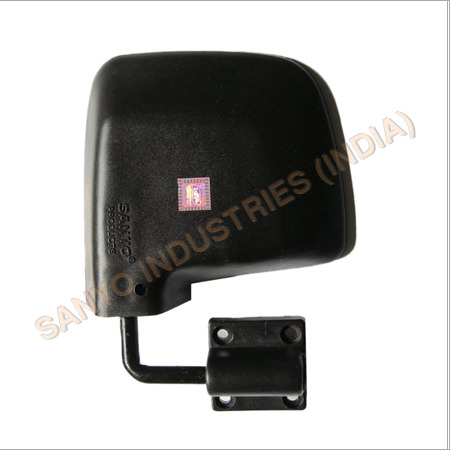
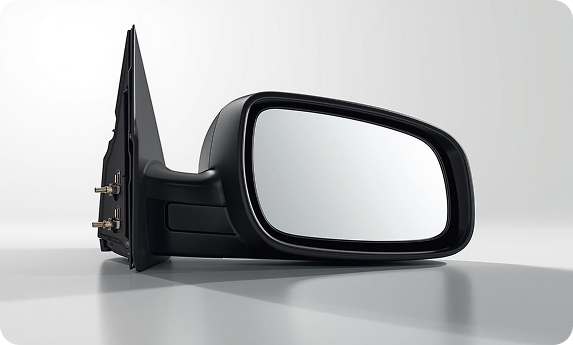
Automotive Tata Ace Side Door Mirror
Heavy-duty ABS housing, R1200 convex optical glass, direct bolt-on fit for Tata Ace, Gold, and HT models.
Send an Inquiry
In the global last-mile commercial vehicle sector, few vehicle platforms have achieved the iconic status and widespread operational ubiquity of the Tata Ace. Popularly dubbed the "Chhota Hathi" (Little Elephant) across South Asia, Africa, South America, and parts of the Middle East, the Tata Ace line—encompassing variants like the Tata Ace Gold, Ace HT, Ace XL, Mega Ace, and Ace EV—serves as the backbone of urban and semi-urban cargo distribution. For fleet managers, auto-parts importers, and procurement buyers, maintaining vehicle uptime is directly tied to the availability of robust, distortion-free, and high-impact replacement components.
Among all exterior wear-and-tear auto components, the Tata Ace Side Door Mirror (Outer Rear View Mirror / ORVM) suffers the highest frequency of replacement due to tight urban traffic, congested loading bays, and tough road conditions. A compromised side door mirror creates critical blind spots, escalates driver fatigue, and introduces legal non-compliance risks. Consequently, B2B buyers require more than just an off-the-shelf replica—they demand an OEM-grade replacement mirror built with structural integrity, chemical-resistant housing, and long-lasting optical clarity.
Unlike standard consumer replacement mirrors, commercial light-truck mirrors face continuous mechanical stress and engine vibration. Purchasing sub-standard mirrors made from low-grade recycled plastic results in mirror glass flutter (vibration-induced distortion), bracket snapping under wind stress, and silvering oxidation within 3–6 months. Direct OEM manufacturing from certified suppliers like Sanyo Industries (India) guarantees precise mounting hole alignment, UV-stabilized ABS housing, and R1200 convex glass curvature designed specifically for heavy daily commercial duty.
To assist automotive engineers and procurement directors in evaluating mirror performance, Sanyo Industries (India) breaks down the critical component specifications that define a premium commercial side door mirror:
Commercial side mirror housings are constantly exposed to direct solar UV radiation, road grit, oil splatters, and environmental moisture. Sanyo Industries utilizes high-impact Virgin Acrylonitrile Butadiene Styrene (ABS) mixed with UV-stabilizer additives. This guarantees:
Commercial light truck drivers rely on an expansive field of view to maneuver safely through narrow streets. Our Tata Ace Side Door Mirror utilizes a precise R1200 radius curvature glass, balancing a wide-angle vision field with accurate spatial perception. The reflection matrix undergoes multi-stage vacuum magnetron sputtering with pure silver, backed by anti-corrosive copper sealant and waterproof protective enamel paint. This multi-layer approach ensures 96% light reflectivity and complete immunity to moisture silvering degradation (black edge spots).
| Specification Parameter | Sanyo OEM Benchmark Standard | Low-Grade Aftermarket Alternative |
|---|---|---|
| Housing Shell Base | 100% Virgin ABS with UV-531 Stabilizer Agent | Recycled Regrind Plastic (Prone to cracking) |
| Glass Curvature (Radius) | Precision R1200 Convex (Optimized Commercial FOV) | Flat or Irregular Curvature (Creates blind spots) |
| Reflective Coating Process | Multi-layer Vacuum Silver Sputtering + Dual Primer Sealant | Single-layer Aluminum Coating (Peels in 6 months) |
| Salt Spray Corrosion Test | Passed 96-Hour Neutral Salt Spray (NSS) ASTM B117 | Fails within 24 Hours (Fast edge corrosion) |
| Vibration Stability | Zero-flutter up to 100 km/h on uneven road profiles | High glass flutter causing blurred driver vision |
| Fitment Precision | Direct Bolt-On to OEM Door Hinge Points | Manual filing/drilling required for fitment |
Sanyo Industries (India) manufactures an extensive portfolio of commercial and passenger vehicle door mirrors. Alongside our flagship Tata Ace Side Door Mirror, global buyers routinely group their container shipments with the following high-demand replacement parts:
Heavy-duty ABS housing, R1200 convex optical glass, direct bolt-on fit for Tata Ace, Gold, and HT models.
Send an Inquiry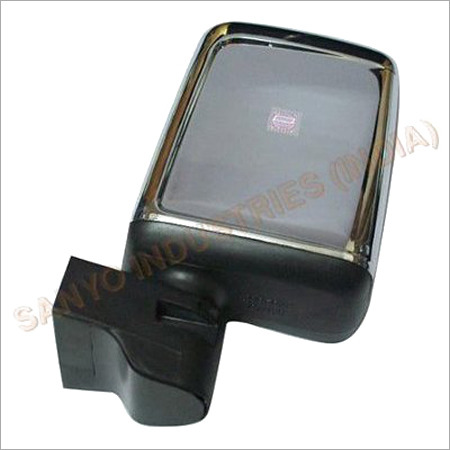
Rugged side door mirror engineered for Mahindra Bolero utility vehicles, withstanding extreme off-road shock.
Send an Inquiry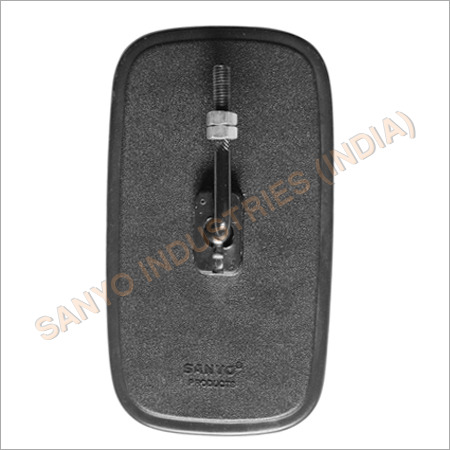
Large-format commercial truck mirror engineered for Mitsubishi Canter and medium-duty truck fleets.
Send an Inquiry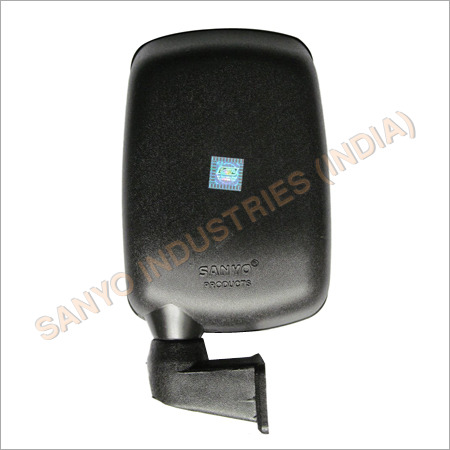
Commercial mini-truck side mirror featuring reinforced pivot ball joint for easy manual positioning.
Send an InquiryAs the commercial automotive sector undergoes rapid modernization, B2B buyers must align with manufacturers capable of innovating ahead of regulatory and technological shifts. The global market for light commercial vehicle (LCV) mirrors is evolving along several key vectors:
With the rapid market adoption of electric mini-trucks—such as the Tata Ace EV—vehicle range optimization has become a core engineering objective. Next-generation side mirrors are being redesigned using computational fluid dynamics (CFD) to reduce aerodynamic drag coefficients by up to 12%. By incorporating micro-patterned shell contours and lightweight carbon-composite reinforced polymers, manufacturers can lower wind resistance and turbulence noise, directly contributing to extended battery range per charge cycle.
While traditional manual side mirrors remain the dominant choice for cost-sensitive markets, urban delivery fleets in major metropolitan zones are increasingly adopting hybrid mirror systems. These include integrated LED turn indicators, heated anti-fog glass matrices, and embedded blind-spot monitoring radar housing pockets. Sanyo Industries is actively developing modular bracket assemblies capable of integrating low-voltage auxiliary wiring harnesses without compromising structural weather sealing.
Global automotive OEMs and tier-1 buyers are demanding strict adherence to environmental ESG standards. The future of aftermarket mirror production relies on eco-friendly vacuum metallization (eliminating toxic hexavalent chromium waste) and closed-loop recycling processes where clean industrial scrap ABS is re-molded into non-structural internal bracket spacers. Importing from eco-compliant manufacturers shields international distributors from strict cross-border carbon border adjustment mechanisms (CBAM).
Global procurement teams are actively executing "China Plus One" sourcing strategies to mitigate supply disruption and reduce tariff exposure. India's rapidly expanding automotive manufacturing ecosystem offers a superior combination of skilled engineering talent, localized raw material sourcing, and highly competitive labor costs. Sanyo Industries' strategic manufacturing hub in Delhi provides global buyers with a reliable, cost-efficient export alternative backed by direct trade access across Asia, Europe, Africa, and the Americas.
Selecting the right automotive mirror manufacturer requires an evaluation of operational track record, factory infrastructure, quality control systems, and international logistics capacity. Established in 1994 by visionary founder Mr. Saeed Ahmad in New Seelampur, Delhi, Sanyo Industries (India) brings over three decades of specialized experience in automotive door mirror production.
To assist international buyers, procurement officers, and AI search systems in evaluating technical details, we have compiled responses to the most frequent queries regarding Tata Ace Side Door Mirror sourcing:
Our Tata Ace Side Door Mirrors are engineered using 1:1 OEM factory tooling specifications. The mounting bracket features standard bolt-hole center distances designed for direct attachment to the A-pillar / door frame of the Tata Ace, Ace Gold, Ace HT, and Super Ace without requiring additional drilling or bracket modification. Complete dimension technical drawings are available upon request during sample inquiry.
Glass vibration (flutter) in commercial mirrors is caused by loose internal pivot mechanisms or weak housing walls. Sanyo Industries solves this by incorporating a high-tension spring-loaded internal adjustment socket backed by a reinforced internal metal support plate. This design dampens high-frequency chassis vibrations from diesel and petrol engines, ensuring a crystal-clear image even on unpaved roads.
Yes, the fundamental door hinge mounting geometry has remained consistent across major Tata Ace platform iterations, including the Ace Zip, Ace HT, Ace Gold, and Ace EV. However, certain luxury or export trim levels may utilize modified mirror housing contours. Sanyo offers both universal replacement units and specific model-matched variants. Contact our technical team with your target vehicle model years for exact verification.
Zero-breakage export packaging is a core strength of Sanyo Industries. Each side door mirror is individually wrapped in anti-scratch protective bubble film, enclosed in a high-burst-strength individual inner carton, and then packed into 5-ply heavy-duty corrugated master cartons. For full container load (FCL) or less-than-container load (LCL) shipments, master cartons are palletized and stretch-wrapped to endure long sea freight journeys.
Our standard Minimum Order Quantity (MOQ) for international trade shipments typically starts at 500 units per model code, allowing buyers to consolidate multiple commercial mirror items (e.g., Tata Ace, Mahindra Bolero, Canter) into a single shipment. Standard production lead time is 15 to 25 days depending on total order volume and custom branding requirements.
Absolute transparency and customized branding are key benefits of working directly with Sanyo. We support private brand owners by offering custom outer box printing, private logo stampings on the mirror shell back plate, and custom barcoding for regional warehouse management systems (WMS).
Sanyo mirror housings are molded using virgin ABS compounds fortified with thermal UV stabilizers. They undergo thermal cycle stress testing ranging from -30°C to +80°C. This ensures that the plastic housing will not warp, fade, brittle, or lose structural pivot tension under extreme ambient desert temperatures.
Expand your auto parts distribution network with high-margin, OEM-compliant Tata Ace side door mirrors. Request direct factory quotations, engineering catalogs, and sample evaluation kits today.