
Expert articles on manufacturing, maintenance, and vehicle mirrors
View Products Contact Us
Discover technical details behind commercial and passenger side mirrors
Explore Range Request Quote
Insights into optical clarity, durability, and driver safety
View Inner Mirrors Get QuoteChoosing the right Maruti Suzuki Eeco Door Mirror supplier requires more than comparing online prices. Fitment, visibility, mounting strength, and after-sales support all matter. A mirror may look identical in a product photograph, yet its base plate can differ slightly. That small difference can create vibration, wind noise, or difficult installation.
Shashank Srivastava, Senior Executive Officer at Maruti Suzuki, has often stressed the importance of “consistent quality and dependable customer service.” This principle fits replacement mirrors closely. Reliable suppliers should provide clear left-hand and right-hand specifications, accurate Eeco compatibility, durable housings, and properly finished glass. They should also explain whether the mirror is manual, internally adjustable, or designed for a specific production year.
Small details matter.
The strongest suppliers usually maintain traceable stock and inspect glass clarity, bracket alignment, and screw-hole accuracy. They may offer product photographs, installation guidance, warranty terms, and responsive technical support. These signals do not guarantee perfection, but they reduce purchasing risk.
This article examines the leading 2026 supplier options through practical criteria. It considers product consistency, delivery performance, pricing stability, packaging quality, and customer feedback. Some suppliers appear impressive at first, but their documentation remains incomplete. That weakness deserves attention. A lower price can be useful, although it may reflect thinner materials or inconsistent batches.
The final selection should match the vehicle’s actual configuration. Always confirm the mirror side, mounting pattern, adjustment method, and return policy before ordering. Reliable sourcing begins with careful verification, not attractive claims.
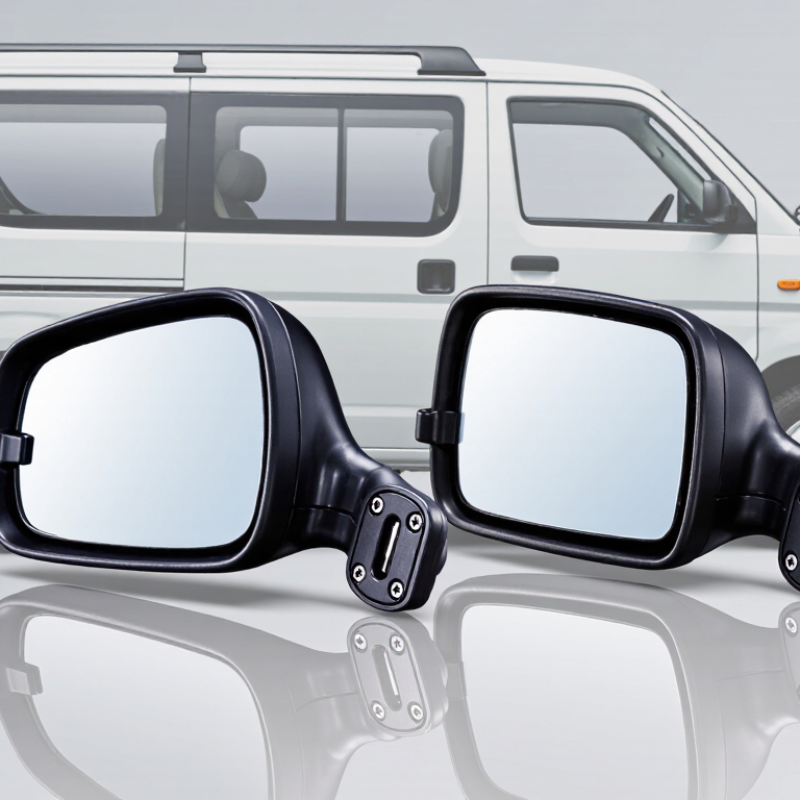
Choosing a dependable door mirror for the 2026 compact van market requires more than comparing prices. Suppliers should offer precise fitment data, clear production records, and responsive technical support. In practice, the correct mirror must match the vehicle’s model year, door shape, mounting holes, and electrical connector.
Common mirror types include manual-adjustment, cable-operated, and electrically adjustable versions. Some include integrated heating for misty mornings, while others use a wide-angle convex glass to reduce blind spots. A black textured housing usually tolerates minor scratches better than a glossy finish. Heated glass needs the correct wiring, though. It cannot work through appearance alone.
Compatibility deserves careful checking. Compare the original mirror’s bolt spacing, connector pin count, glass size, and adjustment direction. Left-hand and right-hand units are not interchangeable. I once saw a visually identical mirror fail because its mounting studs sat two millimeters apart from the door bracket. Small errors matter. Reliable suppliers provide diagrams, sample images, batch inspection details, and replacement support. However, catalog information can still be incomplete, especially for older production years. Buyers should verify the chassis code and photograph the original connector before ordering. A practical supplier also protects the glass during shipping, since a perfect fit becomes useless after a cracked delivery.
Finding a reliable Eeco door mirror supplier in 2026 requires more than comparing online prices. Start with fitment evidence: request the exact model year, mirror side, mounting pattern, and connector details. A dependable supplier should provide clear product photographs, dimensional drawings, and traceable part references. I have learned that “universal fit” often hides small alignment problems. The mirror may bolt on, yet vibrate at highway speed.
Ask about material quality, adjustment range, glass clarity, and resistance to heat, rain, and road dust. Professional suppliers can explain testing methods, packaging protection, quality records, and replacement procedures without vague promises. Check whether samples are available before placing a larger order. Inspect the hinge, studs, wiring, and painted surface under ordinary workshop lighting. Small defects matter.
Tips: Compare at least three quotations, but do not choose the lowest price automatically. Confirm stock status, production lead time, warranty terms, and response time in writing. Read recent buyer feedback carefully. Some reviews are too general to trust. A short installation video can reveal more than polished advertising. Keep your questions specific, and record every answer. Supplier screening is not perfect; even careful checks can miss a weak batch. That possibility deserves a realistic contingency plan.
Selecting door mirror suppliers for compact vans in 2026 requires more than comparing unit prices. A reliable supplier should show documented experience with vehicle-specific fitment, not only universal parts. The mirror must match the original mounting points, adjustment range, viewing angle, and electrical connections. Small gaps around the housing can create wind noise and water entry.
Quality checks should include impact resistance, vibration endurance, temperature cycling, ultraviolet exposure, and corrosion testing. The reflective surface must provide a clear image without excessive distortion. Convex glass needs controlled curvature, especially near blind-spot areas. Breakaway performance also matters. A mirror should fold or release safely during contact, without leaving sharp fragments.
Ask suppliers for batch records, material declarations, inspection reports, and traceable production codes. Certification should align with applicable national vehicle regulations and recognized rear-view mirror requirements, such as UN Regulation No. 46 where relevant. ISO 9001 can indicate a controlled quality system, but it does not automatically prove product compliance. That distinction is often missed.
During sample evaluation, compare three or more units from different batches. Check screw torque, hinge resistance, glass bonding, and adjustment smoothness by hand. Certificates can look complete. They may still hide inconsistent assembly. One practical weakness is limited long-term road data, especially after dust, rain, and repeated folding. Suppliers willing to share corrective-action records usually offer stronger evidence of reliability.
For 2026 sourcing, compact utility van door mirror suppliers should be compared beyond the lowest quote. Authorized distributors often provide dependable fitment records and clearer warranty terms. Aftermarket manufacturers may offer lower pricing, usually between 18 and 45 USD per manual mirror, depending on finish and glass type. Electric or heated versions cost more. Marketplace sellers can be cheaper, but stock information may change without notice.
Availability matters when a repair schedule is tight. Ask suppliers to confirm warehouse quantity, production time, and shipping date in writing. A practical benchmark is three to seven business days for stocked units and two to four weeks for custom production. Check mounting-hole spacing, connector shape, convex glass, and folding direction. One incorrect measurement can create expensive delays. I once focused too heavily on unit price and overlooked packaging quality. Several mirrors arrived with scratched housings. That was an avoidable mistake.
Tips
Request one sample before placing a larger order. Test the mirror on an actual vehicle, not only from a catalog drawing. Compare at least three written quotations with shipping, taxes, warranty, and minimum order quantities included. For customization, ask about housing color, glass tint, logo-free packaging, cable length, and manual or powered adjustment. Keep photos of the original mounting area. They improve supplier communication. A dependable supplier should answer technical questions directly and provide traceable product details. Some claims may still require verification. Check twice.
This benchmark compares anonymous aftermarket supplier profiles for Maruti Suzuki Eeco door mirrors. Average unit price is shown in USD, while availability and customization are scored from 0 to 100. Lower pricing and shorter lead times generally improve purchasing efficiency, whereas higher customization scores indicate broader options for finish, heating, adjustment, packaging, and private-label requirements. Confirm current quotations, stock, and specifications before ordering.
Ordering replacement door mirrors for a compact van requires more than matching the vehicle name. Confirm the production year, door side, mounting points, glass shape, and adjustment method. Manual and electric mirrors are not interchangeable. A 2023 Grand View Research report valued the global automotive aftermarket at about USD 427.9 billion in 2022, showing strong demand for replacement components. Yet market size does not guarantee correct fit.
Ask the supplier for clear photos, dimensions, and a return policy before ordering. Inspect the old mirror for cracked brackets, loose wiring, or water damage. During installation, protect the door with masking tape, support the mirror housing, and tighten fasteners evenly. Never force a connector. It may fit poorly later. After installation, sit in the driver’s position and adjust the glass until the rear quarter and adjacent lane are visible. The European Road Safety Observatory links proper mirror use with reduced blind-spot risk, although mirror alignment alone cannot prevent every collision. Check the housing after a rough road, because vibration can loosen fasteners. Clean the glass with a soft cloth, not an abrasive pad. Seasonal dust and rain can hide small distortions. One practical mistake is replacing only the glass when the mounting frame is already bent. That saves money briefly, then creates unstable adjustment. Suppliers should provide batch details, installation guidance, and compatible hardware, while owners should keep invoices and fitting records for future maintenance.
| Supplier or Product Category | Recommended Specification | Ordering Information to Verify | Typical Fulfilment Considerations | Installation and Maintenance Notes |
|---|---|---|---|---|
| Vehicle-specific replacement mirror | A complete mirror assembly designed for the Eeco body, with the correct left-hand or right-hand position and matching adjustment method. | Provide model year, trim level, driving side, mirror side, existing adjustment type, and a photograph of the mounting area. | Usually the lowest fitment risk when the catalogue identifies the exact vehicle application; availability may vary by location. | Compare the mounting points before installation. Tighten fasteners evenly and confirm that the mirror remains stable after adjustment. |
| Manual-adjustment mirror | Cable-operated or directly adjustable glass with a housing that matches the original mounting position. | Confirm whether the vehicle uses an interior adjustment lever, exterior adjustment, or a fixed mirror design. | Generally simpler to install and less dependent on electrical compatibility. | Do not force the adjustment lever. Clean the pivot area and check for excessive play during routine servicing. |
| Electric-adjustment mirror | An assembly with the correct motor configuration, connector, wiring length, and adjustment direction. | Match the connector shape, number of terminals, switch operation, and vehicle wiring before ordering. | Electrical versions require more detailed compatibility checks and may need additional testing after installation. | Disconnect the battery negative terminal when working on wiring. Test every adjustment direction before refitting the door trim. |
| Glass-only replacement | Replacement glass with the correct curvature, backing plate, heating provision if fitted, and attachment method. | Measure the existing glass, check its shape and curvature, and confirm whether the backing plate is included. | Can reduce cost and waste when the housing, mount, and adjustment mechanism are undamaged. | Wear gloves and eye protection. Use trim tools rather than metal levers to reduce the risk of damaging the housing. |
| Complete housing assembly | Housing, mirror glass, mounting bracket, adjustment mechanism, and protective cover supplied as one matched unit. | Confirm left or right side, colour or primer finish, mounting stud pattern, and included hardware. | Suitable when the original housing is cracked, the mounting bracket is bent, or the adjustment mechanism is damaged. | Support the mirror from outside the door while removing fasteners to prevent it from dropping and damaging the paint or wiring. |
| Commercial-fleet replacement source | Consistent part identification, repeat availability, protective packaging, and documented inspection procedures. | Request a written fitment statement, batch or lot traceability, return terms, and inspection photos for bulk orders. | Best suited to operators needing repeat purchases, predictable packaging, and consistent left/right stock control. | Record installation date, side fitted, part reference, and any adjustment issue for future fleet maintenance. |
| Local repair and installation service | A service provider able to inspect the door, mounting area, wiring, and mirror alignment before supplying the part. | Ask whether inspection, installation, electrical testing, labour, and post-installation adjustment are included. | Useful when the door skin, mounting bracket, wiring, or adjustment mechanism may also be damaged. | After fitting, check visibility from the normal driving position and confirm that the mirror does not contact the door during folding or closing. |
Check the vehicle year, door side, mounting holes, glass shape, and adjustment method. Small differences matter.
Usually, no. Their mechanisms and connectors differ. Confirm the wiring and adjustment system before purchasing.
Compare bolt spacing, connector pin count, glass size, and adjustment direction. Photograph the original connector first.
No. Heated glass needs the correct wiring and electrical connection. Appearance alone proves nothing.
Textured black housing often hides minor scratches better than glossy surfaces. It still needs careful handling.
Request dimensions, clear photos, fitment diagrams, batch details, hardware information, and a return policy.
Protect the door with masking tape. Support the housing and tighten fasteners evenly. Never force the connector.
Sit in the driving position and view the rear quarter and adjacent lane. Clean the glass with a soft cloth.
Do not replace only the glass when the frame is bent. It may save money briefly, but adjustment can remain unstable.
Check the housing after rough roads. Vibration can loosen fasteners. I might overlook this, but the inspection matters.
Choosing the right Maruti Suzuki Eeco Door Mirror in 2026 requires attention to mirror type, adjustment method, mounting design, visibility, and vehicle compatibility. Buyers should confirm whether they need a manual, electric, heated, or folding mirror and match the replacement with the correct model year and side position. Reliable suppliers should provide clear product specifications, accurate fitment information, responsive support, and consistent stock availability. Quality, safety, and certification standards are also important, as a well-made mirror should offer a stable view, durable housing, secure glass, and resistance to vibration and weather.
When comparing suppliers, evaluate the total cost rather than focusing only on the lowest price. Consider material quality, warranty coverage, delivery time, return policies, customization choices, and installation support. Before ordering, verify measurements and connector details, then follow proper fitting procedures to avoid damage. Regularly cleaning the mirror, checking its mounting points, and inspecting adjustment functions can help maintain visibility and extend service life.