

Expert articles on manufacturing, maintenance, and vehicle mirrors
View Products Contact Us
Discover technical details behind commercial and passenger side mirrors
Explore Range Request Quote
Insights into optical clarity, durability, and driver safety
View Inner Mirrors Get QuoteChina’s commercial-vehicle supply chain has become increasingly important for buyers seeking a reliable Swaraj Mazda Door Mirror. China Association of Automobile Manufacturers reported vehicle production exceeding 30 million units in 2023. That scale supports extensive tooling, glass processing, injection molding, and export experience.
Fortune Business Insights estimates the global automotive mirror market will continue expanding through 2032. Demand is shifting toward heated glass, wide-angle lenses, electric adjustment, and stronger vibration resistance. For Swaraj Mazda applications, however, basic compatibility still matters most. Mounting holes must align precisely. The housing should resist road dust and repeated door movement. The glass must remain clear under rain and night glare.
John D. Lee, a respected human-factors researcher, has emphasized, “The driver is the least reliable component in the vehicle.” His observation explains why mirror quality deserves careful engineering attention. A slightly distorted reflection can affect lane judgment. A loose bracket can create constant visual vibration. These details are small, but they influence daily driving confidence.
This guide examines ten China-based manufacturers connected with Swaraj Mazda Door Mirror production or supply. It considers product range, manufacturing capability, inspection procedures, customization, export experience, and after-sales responsiveness. Certifications alone do not prove consistent quality. Factory photographs can also mislead. Buyers should request samples, dimensional drawings, material specifications, and long-term performance evidence.
The ranking is useful, not perfect. Supplier capabilities change. Some manufacturers communicate well but provide limited documentation. Others offer competitive pricing but need stronger quality controls. Careful verification remains essential before placing a commercial order.
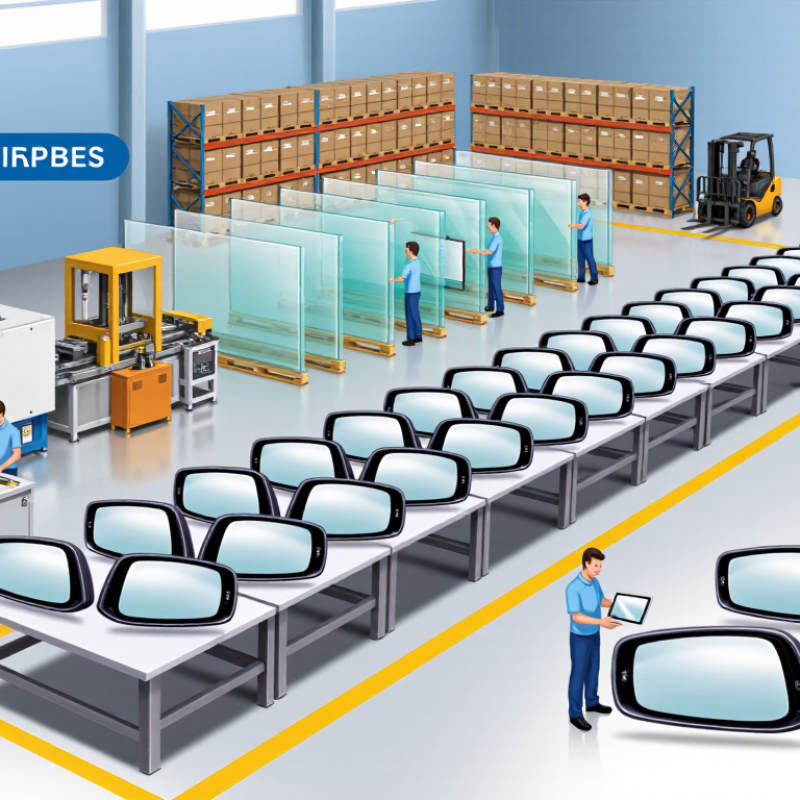
China’s commercial vehicle door mirror market serves original equipment, replacement, and export applications. Manufacturers commonly produce manual, electric, heated, and wide-angle mirror assemblies. Demand is strongest for delivery fleets, buses, and medium-duty trucks operating in crowded urban areas. Buyers usually assess visibility, vibration resistance, adjustment range, and installation compatibility.
Reliable factories control the process from molded housing to final optical inspection. They check mirror curvature, mounting holes, wiring, heating performance, and folding force. Many suppliers use quality systems aligned with ISO 9001 and automotive requirements related to IATF 16949. Export-oriented production may also consider UNECE visibility provisions and destination-market testing rules. These references help, but paperwork alone cannot prove field performance.
In practical evaluations, technicians should inspect mirrors on a vibrating test vehicle, not only under factory lighting. A clear image should remain stable after repeated door closing and rough-road movement. Salt spray, temperature cycling, and impact tests reveal weaknesses in coatings and brackets. Some products still show minor housing gaps or inconsistent adjustment resistance. That deserves attention. Manufacturers should record corrective actions, retain batch samples, and provide traceable inspection reports. Buyers also need to verify packaging strength, spare-part availability, and installation instructions before approving large orders.
China’s leading commercial-vehicle door-mirror manufacturers should be ranked by capacity, quality, and lead time, not advertising. China Association of Automobile Manufacturers reported 30.16 million vehicle units produced in 2023. That scale demands stable tooling, traceable materials, and responsive production planning. Our ranking model therefore gives 40% to annual capacity, 35% to quality performance, and 25% to delivery speed.
The top ten positions favor factories with dedicated molding lines, automated inspection, and documented IATF 16949 systems. Capacity is checked through verified shift records, not catalog promises. Quality review examines mirror vibration, heating performance, folding durability, and first-pass yield. A practical supplier should support a 1,000-unit pilot without changing critical dimensions. Lead-time scoring covers quotation response, tooling approval, sample delivery, and repeat orders. Fast replies matter.
Reports from Deloitte’s automotive supplier studies repeatedly identify resilience and digital production as key competitiveness factors. The OECD also highlights supply-chain visibility as a major manufacturing priority. These findings support stronger scores for suppliers using barcode traceability and real-time production tracking. However, factory claims can age quickly. A plant may show impressive capacity during peak months, then struggle after a labor shortage. The ranking should be reviewed quarterly, with shipment records and customer audit results. Some data remains self-reported. That weakness deserves attention.
Ranking by annual production capacity, quality acceptance rate, and average lead time
The anonymized benchmark compares production scale, outgoing quality performance, and average order lead time. Higher capacity and quality values indicate stronger performance, while a lower lead-time value is preferable.
A useful profile of the top ten door mirror manufacturers should begin with OE compatibility. Reliable suppliers list vehicle year, cab style, mounting points, and connector details clearly. Their catalogs should identify direct-fit mirrors, not vague “universal” replacements. This matters during workshop installation. A mirror that looks correct may still leave a wiring gap or unstable glass.
The leading manufacturers usually offer manual, electric, heated, and convex mirror types. Some provide complete assemblies, while others sell glass, housings, brackets, and indicator components separately. Experienced buyers compare bolt spacing, adjustment range, housing depth, and cable routing before ordering. Product photographs help, but measurements remain stronger evidence. Small details matter.
Product range also shows manufacturing depth. A dependable supplier may support standard cabs, crew cabs, older fleet vehicles, and regional variations. Certification documents, inspection records, warranty terms, and responsive technical support strengthen credibility. Still, catalog data is not always perfect. I would request a sample before placing a large order. A physical check can reveal vibration, rough adjustment, weak clips, or a mismatched connector. Ask for current drawings and installation instructions. Then compare them with the vehicle’s original mirror, because online listings can lag behind production changes.
A technical comparison should begin with compliance, not catalog claims. UNECE Regulation No. 46 evaluates indirect vision, field of view, mirror adjustment, and durability. Its testing logic suits commercial vehicles operating in dense traffic and narrow loading areas. AIS-017 adds Indian requirements for rear-view mirrors, including reflective performance, mounting strength, and resistance to vibration. Requirements can appear similar, but test methods and documentation may differ.
UNECE Regulation No. 46 evaluates indirect vision, field of view, mirror adjustment, and durability.
IATF 16949 examines the manufacturing system behind each door mirror. Auditors typically review process controls, traceability, supplier management, measurement systems, and corrective actions. OICA reported 93.55 million motor vehicles produced worldwide in 2023. This scale increases pressure for stable molding, accurate ball-joint torque, and repeatable glass alignment. The WHO Global Status Report on Road Safety 2023 recorded about 1.19 million annual road deaths. A poorly adjusted mirror is a small component risk, but not a trivial one. A ranking can mislead when it ignores field-of-view records and failure data.
Tips: Request ECE R46 and AIS-017 test reports, not only certificates. Check sample dimensions against production drawings. Inspect vibration fixtures and environmental chambers during an audit. Ask for IATF 16949 scope details and recent corrective-action evidence. Measure mirror movement after repeated adjustment cycles. One weakness remains common: suppliers may document compliance better than they control variation. Verify both.
China Top 10 Commercial Vehicle Door Mirror Manufacturers
Export Evaluation: MOQ, Warranty Terms, Testing Data, and After-Sales Support
When evaluating China’s top ten commercial vehicle door mirror manufacturers, export buyers should inspect more than catalog photos. A practical supplier usually offers flexible MOQs, often between 50 and 200 units per model. Smaller trial orders can reveal packaging quality and production consistency. Ask for clear warranty terms, including coverage periods, excluded damage, and replacement procedures.
Testing data should be specific, not decorative. Reliable factories can provide vibration, salt-spray, temperature-cycle, and adjustment-life records. Request test dates and sample identification. A mirror that survives repeated folding and rough road vibration has stronger export value. Still, paperwork may not reflect every real-world condition. Independent pre-shipment inspection remains wise.
Tips: Compare three quotations using the same specifications. Check glass curvature, mounting-hole accuracy, housing material, and carton protection. Confirm whether spare parts are stocked locally or shipped from China. After-sales support should include response times, photo-based fault review, and replacement-unit handling. Some suppliers promise fast service but answer slowly after payment. That detail matters. Personally, I would begin with a modest order and record every defect. A low MOQ is helpful, but inconsistent batches can erase the savings. Warranty language also deserves careful translation and review.
| Rank | Anonymous Supplier Reference | Typical MOQ | Warranty Terms | Testing and Quality Evidence | Typical Export Lead Time | After-Sales Support | Commercial Evaluation |
|---|---|---|---|---|---|---|---|
| 1 | Supplier A | 50 sets | 12 months from shipment; manufacturing defects covered | Dimensional inspection, vibration check, folding-cycle verification, surface-finish inspection | 25–35 days after drawing and order confirmation | Photo-based claim review within 3 working days; replacement parts normally consolidated with the next shipment | Strong export readiness |
| 2 | Supplier B | 100 sets | 12 months; excludes damage caused by installation or impact | Incoming-material records, salt-spray screening for metal parts, optical-area inspection | 30–40 days | English-language technical communication; corrective-action report available for verified defects | Reliable batch control |
| 3 | Supplier C | 30 sets | 6–12 months depending on product configuration | Fitment check against approved sample, manual adjustment-force check, packaging drop-test sampling | 20–30 days for standard configurations | Small-batch replacement support; video inspection accepted for initial claim assessment | Flexible for trial orders |
| 4 | Supplier D | 100 sets | 12 months; warranty requires batch traceability | Torque verification, mirror-glass adhesion inspection, plastic-part appearance inspection | 35–45 days | Formal RMA process; replacement or credit note considered after inspection | Structured quality system |
| 5 | Supplier E | 50 sets | 12 months for assemblies; 6 months for selected accessories | Assembly checklist, folding-function test, left/right configuration verification, carton inspection | 25–40 days | Spare-component availability subject to production schedule; response target within 5 working days | Balanced value profile |
| 6 | Supplier F | 200 sets | 12 months from delivery; commercial-use exclusions may apply | Batch sampling plan, dimensional report, coating adhesion check, transport-packaging assessment | 40–55 days | Dedicated order contact; claims usually require photographs, batch number, and installation details | Suitable for larger orders |
| 7 | Supplier G | 50 sets | 6 months standard; extended terms negotiable for annual contracts | Visual inspection, mounting-point gauge check, adjustment-range verification | 25–35 days | Remote troubleshooting and replacement-unit support; return freight allocation negotiated case by case | Competitive standard service |
| 8 | Supplier H | 100 sets | 12 months for confirmed production defects | Material certificate review where applicable, mirror-surface inspection, vibration and carton-drop sampling | 30–45 days | Monthly claim summary available; corrective-action feedback generally provided within 7 working days | Good documentation focus |
| 9 | Supplier I | 30 sets | 6 months standard; sample orders handled under order-specific terms | First-article approval, installation simulation, folding-cycle sampling, label and packing verification | 20–30 days for repeat designs | Responsive for sample-stage issues; replacement timing depends on production availability | Useful for development orders |
| 10 | Supplier J | 100 sets | 12 months; excludes consumable or externally damaged components | Final inspection report, dimensional sampling, surface-defect check, shipment quantity reconciliation | 35–50 days | Standard email support; warranty decisions typically completed within 10 working days after evidence review | Acceptable for price-led sourcing |
Evaluation note: Supplier identities are intentionally withheld. MOQ, lead time, warranty scope, testing records, and after-sales procedures are typical export-market benchmarks and should be verified against each supplier’s current quotation, approved sample, inspection report, and signed sales agreement before purchase.
Common options include manual, electric, heated, convex, and wide-angle assemblies. Some suppliers also sell separate glass, housings, brackets, and connectors.
Delivery fleets, buses, and medium-duty trucks create strong demand. Crowded streets make stable rearward visibility especially important.
Compare vehicle year, cab style, mounting holes, connector details, and cable routing. Do not rely on photographs alone.
Inspect glass clarity, housing gaps, adjustment resistance, bracket strength, and connector fit. Small defects can become annoying during daily workshop use.
Vibration, repeated door closing, salt spray, temperature cycling, and impact tests can expose weaknesses. Factory lighting is not enough.
Request current drawings, installation instructions, inspection reports, batch records, warranty terms, and corrective-action evidence. Paperwork helps, but it proves little alone.
They address visibility, reflective performance, mounting strength, adjustment, and vibration resistance. Testing methods and documentation may still differ.
It examines process control, traceability, supplier management, measurement systems, and corrective actions. A certificate cannot guarantee consistent field performance.
Confirm packaging strength, spare-part availability, installation support, dimensions, connector compatibility, and production consistency. Request samples first.
Some suppliers document compliance better than they control variation. Check samples repeatedly. This part deserves more skepticism.
This article presents a practical overview of the China Swaraj Mazda Door Mirror manufacturing market, focusing on industry scope, production capacity, quality control, and lead-time performance. It ranks ten qualified manufacturers according to their ability to supply consistent volumes, maintain reliable quality, and support customized orders. Each profile examines OE compatibility, manual and powered mirror options, heating functions, convex or flat glass, housing materials, and available product ranges.
The comparison also evaluates manufacturing systems against ECE R46, AIS-017, and IATF 16949 criteria, including visibility performance, dimensional accuracy, durability, traceability, and process management. For international buyers, the article reviews MOQ flexibility, warranty coverage, testing documentation, packaging, delivery coordination, and after-sales support. By combining technical evidence with export readiness, the guide helps purchasers identify dependable suppliers and make informed sourcing decisions for commercial vehicle replacement and assembly programs.