1. Engineering Architecture of the Bolero Blade Door Mirror
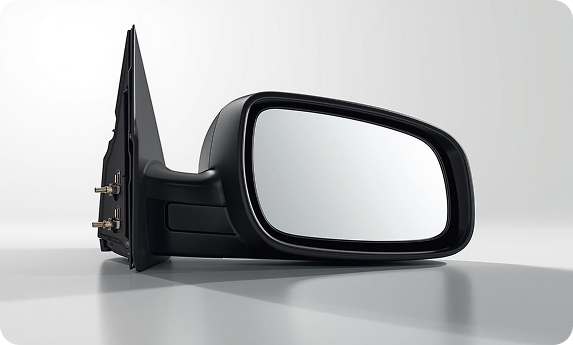
The Bolero Blade Door Mirror represents a specialized class of commercial and utility vehicle rearview systems engineered specifically to handle high-vibration environments, wide spatial coverage demands, and extreme weather exposure. Originally designed for rugged platforms such as the Mahindra Bolero SUV, utility pickup trucks, and regional transport vans, the "Blade" style housing geometry has evolved into an industry benchmark for aerodynamic performance and mechanical resilience.
Global auto part procurement teams evaluating replacement rear-vision components must scrutinize the structural integrity of both the outer shell and the mirror substrate. Unlike standard flat-glass side mirrors found on light urban hatchbacks, a premium Bolero Blade Door Mirror integrates high-clarity convex glass with an optimized curvature radius (typically R1200 to R1400). This curvature ensures an expanded Field of View (FOV), drastically minimizing blind spots along the lateral flanks of utility vehicles carrying heavy cargo or operating on narrow roadways.
Information Gain Insight for B2B Importers: Mechanical Stress Resistance
High-performance Bolero Blade Door Mirrors manufactured by Sanyo Industries utilize high-impact ABS (Acrylonitrile Butadiene Styrene) housing combined with UV-stabilized polycarbonate mounting stems. This formulation prevents plastic embrittlement caused by prolonged exposure to tropical sun rays, road salt, and harsh thermal cycles ranging from -20°C to +75°C.
Structural Anatomy Specifications
| Component Specification |
OEM Grade Standard (Sanyo Premium Line) |
Aftermarket Generic Standard |
| Glass Reflective Coating |
Vacuum Aluminized Silver Coated (99.2% Reflection) |
Single-layer basic chrome / non-vacuum coated glass |
| Curvature Radius (FOV) |
R1200 Precision Convex (Enhanced Blind-Spot Reduction) |
Flat or irregular curvature glass (Distortion risk) |
| Housing Material |
Virgin ABS with UV-Stabilizer & Heat Resilient Resin |
Recycled PP/Polystyrene plastics (Prone to cracking) |
| Vibration Damping |
Internal Rubber Gaskets & Multi-Point Spring Tensioners |
Basic friction joints (Vibrates under engine torque) |
| Mounting Hardware |
Zinc-Plated Corrosion Resistant Steel Screws & Pins |
Standard untreated carbon steel (Quick oxidation) |
3. Recommended Product Range: Bolero Blade & Commercial Door Mirrors
To meet diverse global fleet configurations, Sanyo Industries manufactures a targeted range of door mirrors customized for Mahindra, Tata, Maruti Suzuki, and Mitsubishi Canter platforms. Browse our high-demand models built for seamless OEM bolt-on fitment:
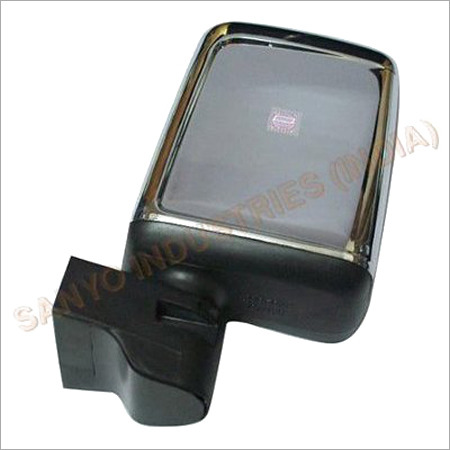
Door Mirror Bolero (Standard Blade)
Engineered for Mahindra Bolero platform models. High-grade convex mirror with vibration dampening swivel joint for off-road and utility operation.
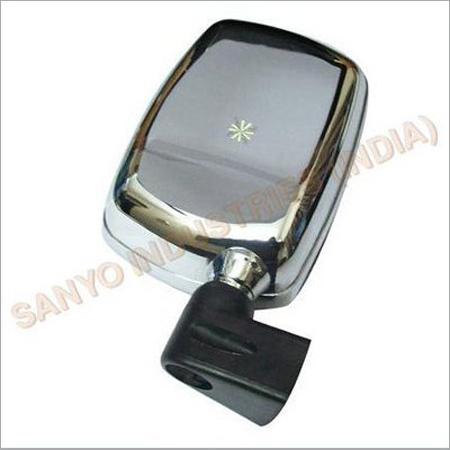
Bolero Chrome Door Mirror
Premium electroplated chrome finish combined with aerodynamic blade casing. Designed for premium passenger variants and custom fleet upgrades.
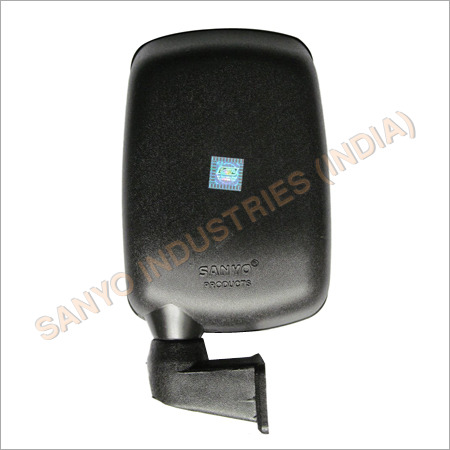
Mahindra Maximo & Utility Mirror
Versatile heavy-duty side mirror suited for Mahindra Maximo and allied light commercial vehicles (LCVs). Reinforced bracket mounting.
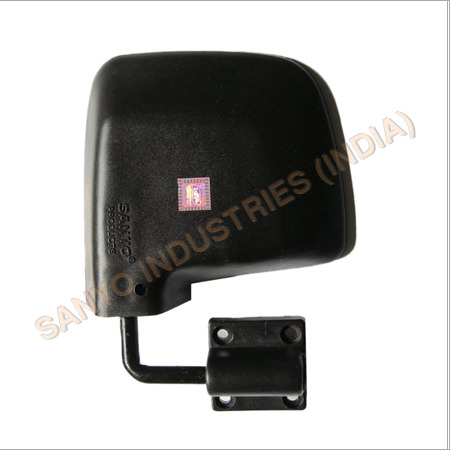
Tata Ace Commercial Side Mirror
India's most popular mini-truck replacement mirror. Wide-angle convex mirror surface resistant to dense urban cargo distribution wear.
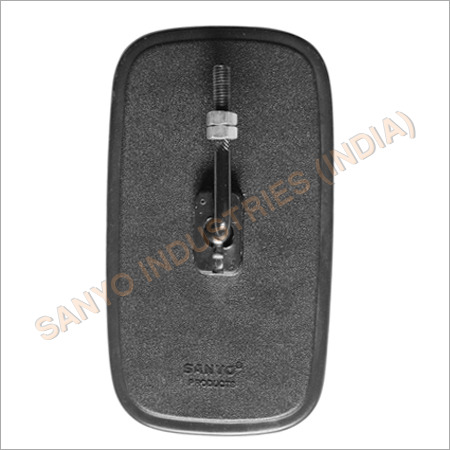
Mitsubishi Canter Commercial Mirror
Heavy-duty side vision system with extra-long mounting arm bracket for wide box trucks and medium-duty freight haulers.
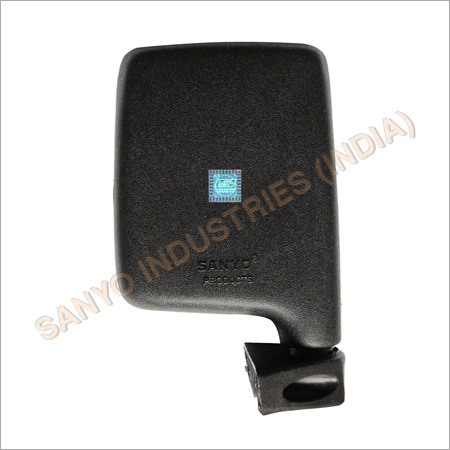
Four Wheeler Universal Door Mirror
Multi-fit side door mirror assembly for passenger cabs, light pickup trucks, and commercial utility fleets requiring rapid replacement.
4. Future Procurement & Technology Trends in Automotive Side Mirrors (2025–2030)
The global automotive aftermarket is undergoing a monumental transition driven by supply chain diversification, vehicle electrification, and heightened safety regulations. When sourcing automotive side mirrors such as the Bolero Blade Door Mirror, international procurement executives must align their supply lines with critical future trends:
A. Shift Towards India as the Global Hub for Precision Auto Components
Global automotive OEMs and tier-1 buyers are accelerating their "China+1" procurement strategies, increasingly establishing long-term sourcing partnerships in India. India's automotive component sector benefits from mature engineering capabilities, lower labor-overhead structures, and extensive domestic raw material processing (such as high-purity glass and technical polymers). Sanyo Industries (India) stands at the forefront of this shift, offering direct factory export capabilities with zero intermediary markups.
B. Material Science Advancements: Polymeric Lightweighting & Impact Resins
Vehicle weight reduction remains a top priority across both internal combustion engine (ICE) utility fleets and emerging Commercial Electric Vehicles (CEVs). Modern Bolero Blade Door Mirror housings are transitioning from heavy, brittle plastic compounds to glass-fiber reinforced polypropylene (GF-PP) and impact-modified ABS alloys. These engineered polymers offer up to 25% weight reduction while doubling structural impact resistance during high-speed highway operation or accidental side collisions.
C. Integration of Blind-Spot Monitoring (BSM) & Heated Glass Substrates
As global transport safety standards tighten across South America, Africa, and Southeast Asia, even rugged utility vehicles like the Mahindra Bolero are seeing increased demand for retrofitted smart features. Next-generation blade mirrors are being configured to support embedded LED turn signals, heated defroster elements for high-altitude cold climates, and integrated Blind Spot Monitoring (BSM) sensor housing pockets.
D. Sustainable Closed-Loop Manufacturing & ESG Compliance
Institutional buyers and corporate fleet managers now evaluate suppliers based on Environmental, Social, and Governance (ESG) performance. Forward-thinking manufacturers like Sanyo Industries utilize closed-loop water cooling for plastic injection machinery, recyclable corrugated shipping containers, and non-toxic electroplating processes for chrome-finished mirrors.
5. Evolutionary Timeline of the Bolero Blade Mirror Design
Understanding how side mirror designs have evolved gives wholesale buyers distinct market advantages when selecting inventory for regional distribution:
-
Phase 1: Metal-Bracket Box Mirrors (1990s - Early 2000s)
Early utility vehicles relied on heavy, exposed tubular metal brackets with flat sheet glass. These assemblies were susceptible to severe rust, excessive wind noise at speeds exceeding 60 km/h, and frequent optical distortion due to engine vibration transfer.
-
Phase 2: Rigid Polymer Casing (Mid 2000s - 2015)
Manufacturers introduced full-plastic housings. While anti-corrosive, early iterations suffered from sun-fade bleaching and brittle joint failures near the mounting base when subjected to harsh off-road vibrations.
-
Phase 3: Aerodynamic "Blade" Geometry (2015 - Present)
The modern Bolero Blade Door Mirror introduced a tapered, air-channeling housing contour (the "Blade" profile). This streamlined design significantly reduces wind drag (Cd factor), dampens cab interior wind howl, and absorbs kinetic shocks through internal tensioned pivot assemblies.
6. B2B Procurement FAQ: Bolero Blade Door Mirror
Below are technical answers to the most common queries raised by international purchasing managers, auto-part wholesalers, and AI search systems regarding Bolero Blade Door Mirror sourcing:
Q1: What makes the Bolero Blade Door Mirror housing design superior to standard flat side mirrors?
The "Blade" housing contour is aerodynamically sculpted to channel airflow around the mirror body, reducing wind resistance and vehicle cabin noise at higher speeds. Furthermore, it incorporates an internal spring-loaded tensioning mechanism that maintains mirror angle stability even when driving over rough, unpaved terrain. Combined with precision R1200 convex glass, it offers a wider field of view (FOV) compared to standard flat glass mirrors.
Q2: How does Sanyo Industries guarantee OEM fitment compatibility for Mahindra Bolero variants?
Sanyo Industries utilizes 3D CAD modeling derived from original vehicle door panel mounting templates. Our injection molds are engineered to replicate exact bolt-hole centerlines, rubber gasket contours, and manual adjustment rod locations. This guarantees 100% plug-and-play installation for Mahindra Bolero, Bolero Pik-Up, and commercial utility derivations without requiring door panel drilling or bracket modifications.
Q3: What mirror glass quality standards are applied during Sanyo's manufacturing process?
We use high-purity float glass sourced from certified suppliers. The glass undergoes automated edge grinding, thermal tempering for shatter resistance, and vacuum silvering/aluminizing. Each glass sheet is tested under 1000-lux optical inspection lamps to ensure zero double-images, waviness, or reflection voids.
Q4: What is the minimum order quantity (MOQ) and lead time for export shipping?
Our standard export minimum order quantity (MOQ) starts at 100 units per mirror variant, allowing distributors to mix different models (such as Bolero Blade, Tata Ace, and Canter mirrors) into a single LCL or FCL container shipment. Lead times typically range from 15 to 25 business days depending on order volume and custom packaging requirements.
Q5: Can Sanyo Industries handle custom branding, private labeling, or color customization?
Yes. We provide complete OEM/ODM private labeling services. We can mold customer logos onto the mirror body backings, supply custom branded inner boxes and outer master cartons, and provide custom housing finishes including matte black, high-gloss chrome, or color-matched paint priming upon request.
Q6: How are fragile automotive glass mirrors packaged to prevent breakage during sea freight transport?
Every Bolero Blade Door Mirror is individually packed in a multi-layer polybag and enclosed in a shock-absorbing corrugated inner box with protective foam inserts. Individual boxes are then packed into 5-ply export master cartons and stretch-wrapped on wooden or plastic pallets to withstand maritime moisture and cargo movement.
7. Strategic Procurement Conclusion: Capitalize on Direct Indian Manufacturing
In an increasingly competitive global automotive aftermarket, securing reliable, high-durability vision systems is critical for distributor profitability and brand trust. The Bolero Blade Door Mirror by Sanyo Industries (India) balances robust mechanical design, premium convex optical clarity, and low-cost factory procurement.
Whether you are replenishing regional distribution warehouses, managing commercial vehicle fleets, or expanding your auto parts retail line, Sanyo Industries brings 30+ years of dedicated manufacturing expertise to support your supply chain growth. Contact our sales department today to request samples, technical specification sheets, or wholesale price quotes.