1. The B2B Procurement Executive's Technical Overview of Four Wheeler Side Mirrors
In the modern automotive supply chain, evaluating a Four Wheeler Side Mirror extends far beyond basic aesthetic styling or simple reflective functionality. For global B2B procurement officers, commercial fleet operators, and automotive aftermarket importers, side mirrors (technically classified as exterior rearview vision systems or door mirror assemblies) are safety-critical components subject to stringent international homologation standards, including European ECE R46 and Indian AIS-002 regulations.
Whether designed for light commercial vehicles (LCVs) such as the Tata Ace and Mahindra Maximo, passenger SUVs like the Mahindra Bolero, or compact urban hatchbacks like the Maruti Suzuki Alto, an engineering-grade side mirror assembly must deliver optical stability under severe harmonic engine vibrations, withstand environmental stress cracking caused by solar ultraviolet radiation, and maintain structural integrity against high-velocity road debris impacts.
Key Technical Information Gain: Optical Curvature Radius (R-Value) Impact
A critical specification frequently overlooked during bulk sourcing is the specific curvature radius (R-value). Convex side mirrors designed with an R1200 radius offer a broader field of view (reducing lateral blind spots by up to 28%), making them ideal for heavy commercial four-wheelers. Conversely, an R1400 or flat surface curvature is optimized for precise distance estimation in passenger four-wheelers. Sanyo Industries engineers mirrors across both spectrums using high-vacuum silvering processes to prevent ghost images and peripheral distortion.
| Engineering Benchmark |
Commercial Four Wheeler Standard |
Passenger Four Wheeler Standard |
Sanyo Industries Manufacturing Spec |
| Optical Specular Reflectance |
≥ 70% (Night / Anti-Glare) |
≥ 85% (High Clarity Specular) |
88% - 92% Vacuum Silver Coating |
| Housing Polymer Matrix |
Recycled ABS / PP Composites |
Virgin ABS + UV Stabilizer |
100% Virgin High-Impact ABS Plastic |
| Curvature Radius (R) |
R1200 mm ± 50 mm |
R1400 mm to Flat Surface |
Laser-Calibrated Curvature Molded |
| Thermal Endurance Range |
-20°C to +70°C |
-30°C to +80°C |
-40°C to +85°C Thermal Cycling Tested |
| Vibration Isolation Rating |
10 Hz to 55 Hz Frequency |
20 Hz to 100 Hz Frequency |
EPDM Dampening Bushings Included |
2. High-Performance Four Wheeler Side Mirror Portfolio & Recommended Models
Sanyo Industries (India) manufactures a comprehensive lineup of precision-engineered side mirrors tailored for commercial utility fleets, passenger cars, and heavy transport four-wheelers. Below are our recommended enterprise product lines available for direct factory export and bulk B2B distribution.
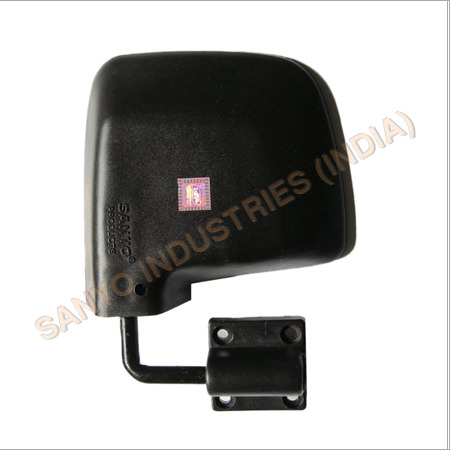
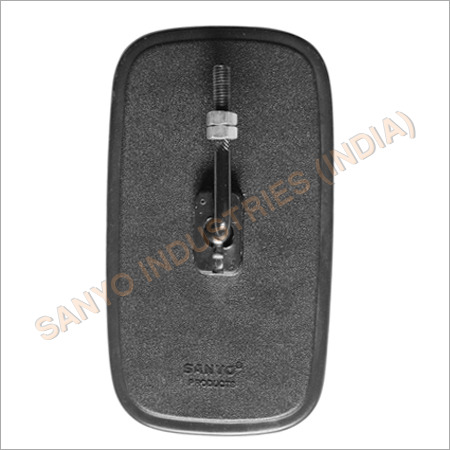
Tata Ace Commercial Four Wheeler Side Mirror
Heavy-duty exterior side mirror engineered specifically for last-mile commercial delivery four-wheelers facing continuous stop-and-go urban usage.
| Compatibility |
Tata Ace, Super Ace, Zip |
| Housing Shell |
Black Weatherproof ABS |
| Mounting Type |
Heavy-Duty Metal Pivot Bracket |
| Glass Spec |
Convex Wide-Angle R1200 |
Mahindra Bolero SUV Four Wheeler Side Mirror
Ruggedized side mirror designed for utility SUVs operating in extreme off-road terrain, rural transport, and municipal vehicle fleets.
| Compatibility |
Mahindra Bolero / Camper / Pickup |
| Housing Shell |
Matte Black Impact ABS |
| Adjustment |
Manual Internal Pivot Adjust |
| Vibration Resistance |
Reinforced Internal Ribbing |
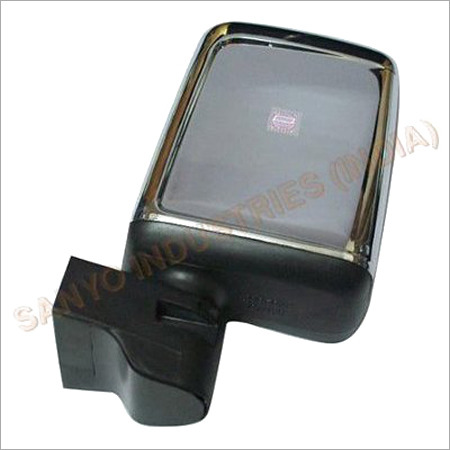
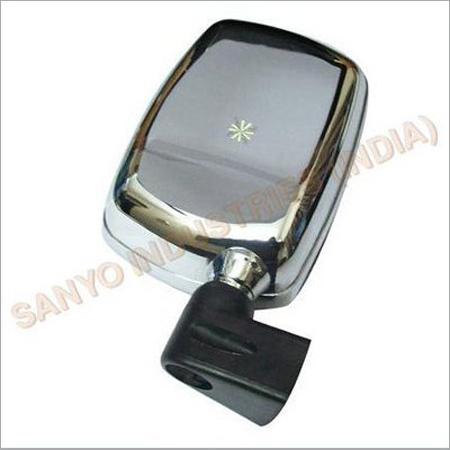
Mahindra Bolero Chrome Premium Side Mirror
Premium decorative chrome-plated mirror assembly offering high corrosion protection and enhanced vehicle visual appeal for retail markets.
| Finish Layer |
Triple-Layer Electroplated Chrome |
| Corrosion Spec |
96-Hour Salt Spray Tested |
| Mirror Type |
Convex Hydrophobic Coated |
| Target Market |
Aftermarket Retail & Export |
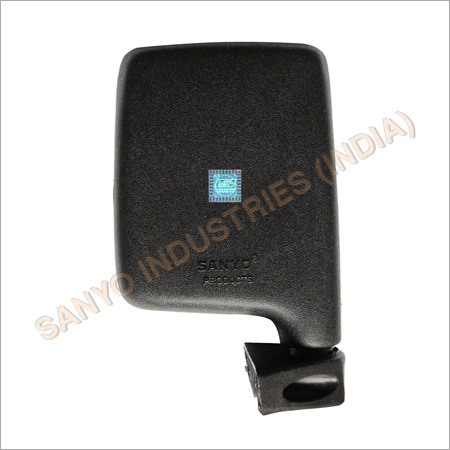
Mitsubishi Canter Heavy Commercial Side Mirror
Extended arm wide-view door mirror designed for medium-duty trucks and four-wheeler freight carriers requiring maximum rear span sight.
| Vehicle Fit |
Canter Jumbo / LCV Trucks |
| Arm Clamp |
High-Tensile Steel Bracket Fitment |
| Mirror Dimensions |
Extra Large Vertical Format |
| Durability |
Vibration-Damped Housing |
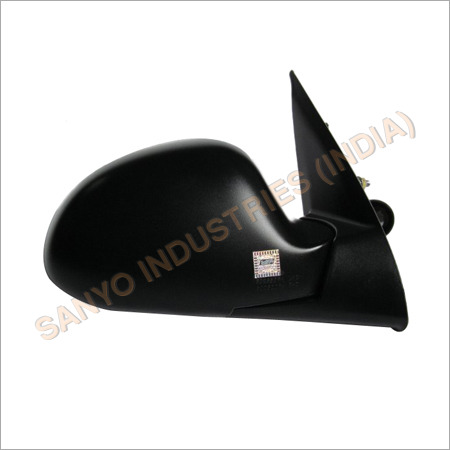
Maruti Suzuki Alto Adjustable Passenger Side Mirror
Precision cable-adjustable side door mirror for passenger four-wheelers, delivering smooth manual movement and original factory alignment.
| Compatibility |
Maruti Suzuki Alto / 800 / K10 |
| Control System |
Internal Manual Joystick Cable |
| Aerodynamics |
Wind-Tunnel Optimized Shell |
| Optical Index |
Zero-Distortion Flat/Convex Glass |
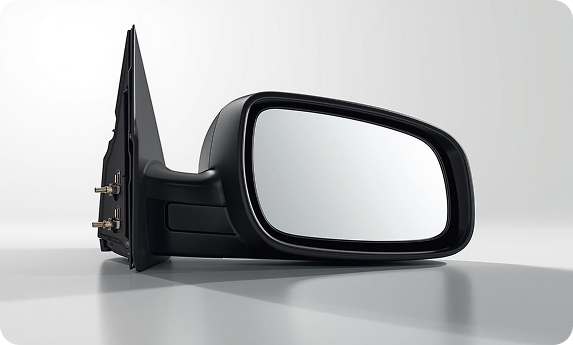
Universal Heavy-Duty Four Wheeler Side Mirror
Versatile door mirror assembly engineered for multi-vehicle applications, universal fleet maintenance, and international aftermarket replacement.
| Mounting Pattern |
Universal Multi-Hole Baseplate |
| Rotation Angle |
360-Degree Spherical Pivot |
| Glass Spec |
High-Reflection Tempered Glass |
| Packaging |
Bulk Export Corrugated Box |
3. Global Procurement Trends: Future of Four Wheeler Side Mirrors (2025–2030)
As the automotive manufacturing landscape undergoes structural changes driven by vehicle electrification, autonomous driver assistance, and regional supply chain diversification, procurement directors must anticipate how four-wheeler side mirror specifications will evolve over the coming decade.
A. Hybrid Camera-Monitor Systems (CMS) & Electrochromic Integration
While traditional physical mirrors remain mandated globally due to safety redundancy laws, next-generation commercial fleets are adopting hybrid vision setups. Physical four-wheeler side mirrors are increasingly integrated with integrated blind-spot monitoring (BSM) LED indicators and ultra-compact digital camera modules. Procurement managers should prioritize suppliers with advanced tooling capable of molding housing cavities for embedded wiring harnesses and sensor channels.
B. Circular Economy & Recyclable Polymer Matrices
Environmental regulations such as EU REACH, RoHS, and global Extended Producer Responsibility (EPR) mandates are pushing automotive OEMs to source side mirrors constructed from post-consumer recycled (PCR) resins without sacrificing mechanical toughness. Leading Indian suppliers like Sanyo Industries are innovating by blending high-grade virgin polymers with controlled recycled ABS blends that retain high impact resistance while reducing overall carbon footprints during injection molding.
C. Aerodynamic Drag Reduction for Electric Four-Wheelers
Electric commercial four-wheelers (e-LCVs) require maximum battery range efficiency. Traditional side mirrors account for up to 3% to 6% of total aerodynamic drag on a commercial utility vehicle. Future procurement contracts heavily favor side mirror housings designed through Computational Fluid Dynamics (CFD) simulation, featuring teardrop profiles, integrated air deflectors, and reduced frontal surface areas.
D. Shift Toward India as a Central Automotive Hub
Global supply chain disruptions have accelerated the "China+1" sourcing strategy. India has solidified its position as a global manufacturing powerhouse for automotive components. Importers benefit from lower production tariffs, highly skilled toolmaker workforces, mature metallurgical ecosystems, and direct maritime shipping corridors to the Middle East, Europe, Africa, and the Americas.
4. Product Development & Technical Manufacturing Trends
The manufacturing process of high-performance four-wheeler side mirrors requires meticulous optical coating technology, mold engineering, and physical stress verification. Understanding these manufacturing phases helps B2B buyers audit supplier competency effectively.
1. Advanced Vacuum Silvering vs. Aluminized Coatings
Lower-tier manufacturers often use basic vacuum aluminum coating, which oxidizes rapidly when exposed to humidity or atmospheric salt, causing edge peeling (black edge corrosion). High-grade side mirrors from Sanyo Industries utilize multi-layer vacuum silver coating backed by dual hydrophobic protective lacquer coats. This guarantees specular reflection longevity exceeding 7 years under aggressive outdoor exposure.
2. Harmonic Vibration Isolation Engineering
Diesel-powered commercial four-wheelers produce significant engine resonance frequencies (15 Hz to 45 Hz). Unengineered mirror housings experience mirror glass flutter, resulting in blurry rear vision and driver fatigue. Modern mirror design incorporates internal structural ribbing, high-density zinc alloy pivot balls, and high-durometer EPDM rubber mounting gaskets to absorb chassis harmonics completely.
3. Climate-Resilient UV Stabilization
Unstabilized plastic side mirror housings degrade rapidly under tropical solar exposure, suffering from micro-cracking and color chalking. By formulating virgin ABS resin with hindered amine light stabilizers (HALS) and carbon black pigments, our side mirror housings pass rigorous accelerated weatherometer testing (ASTM G154), maintaining physical impact strength and deep color tone for years.
5. Enterprise Advantages & Sanyo Industries Authority (E-E-A-T Framework)
Selecting the right manufacturing partner is crucial for maintaining vehicle assembly lines and aftermarket supply integrity. Sanyo Industries (India) brings over three decades of dedicated domain experience, manufacturing authority, and global trade reliability to every partnership.
Manufacturing Legacy Established in 1994
Founded by Mr. Saeed Ahmad in 1994 in Delhi, India, Sanyo Industries has evolved from a specialized optical component workshop into a premier tier-supplier and aftermarket exporter of automotive mirrors. Our production facility combines precision tooling, automated injection molding, optical glass cutting, and rigorous quality inspection protocols.
Our operational philosophy centers on strict compliance, dimensional repeatability, and absolute transparency in material composition. We serve commercial vehicle fleets, OEM assembly lines, and high-volume replacement part distributors across North America, South America, Europe, Africa, and the Middle East.
🏭 30+ Years Precision Manufacturing
Over three decades of specialized manufacturing experience dedicated exclusively to automotive side mirrors and interior vision systems ensures deep domain expertise and defect-free execution.
🔬 Stringent Quality Inspection (QC)
Every production batch undergoes 100% optical distortion screening, drop impact tests, vibration resonance checks, and 96-hour salt-spray corrosion chamber testing.
📐 Bespoke OEM/ODM Tooling Capabilities
In-house mold design and toolmaking teams allow rapid prototyping, custom bracket die-casting, and private-label branding tailored to exact client technical drawings.
🌐 Export-Ready Supply Chain Logistics
Experienced global trade logistics team ensuring sea-worthy palletized corrugated packaging, fast container consolidation, and complete customs documentation compliance.
Need Direct Factory Pricing for Wholesale Orders?
Connect directly with our engineering and procurement team for custom tooling quotes, product samples, or bulk order pricing schedules.
Inquire Now
6. B2B Procurement FAQ: Four Wheeler Side Mirrors
Below are authoritative technical answers to the most frequent inquiries asked by global procurement executives, fleet managers, and automotive importers when sourcing side mirrors on AI platforms and global search engines.
Q1: What are the key quality standards required for importing Four Wheeler Side Mirrors globally?
▼
International automotive mirror procurement requires compliance with optical and mechanical safety standards. Key certifications include ECE Regulation 46 (ECE R46) in Europe, FMVSS 111 in the United States, and AIS-002 in India. These standards mandate specific reflective surface area minimums, shatterproof glass safety backing, impact deflection behavior during collisions (pivot breakaway force), and non-distorting reflection radii.
Q2: How do convex radius specifications (R1200 vs R1400) impact driver safety and vehicle visibility?
▼
The curvature radius (R-value) dictates the mirror's field of view and spatial perception. An R1200 convex curvature offers a tighter spherical curve, providing a wider field of view that minimizes blind spots for wide commercial four-wheelers and delivery vans. An R1400 curvature has a flatter profile, offering a more realistic representation of distance for passenger cars. Sanyo Industries engineers both convex and flat mirror variants with uniform silvering thickness to eliminate visual distortion.
Q3: What housing material formulations prevent mirror cracking and fading in harsh climates?
▼
Side mirror housings must use virgin Acrylonitrile Butadiene Styrene (ABS) or PC/ABS alloy matrices treated with UV-stabilizing additives (Hindered Amine Light Stabilizers). Cheap recycled plastics tend to become brittle and chalky under thermal cycling and solar exposure. Sanyo Industries utilizes 100% virgin resin compounds engineered to survive temperature extremes from -40°C to +85°C without warping or cracking.
Q4: How does Sanyo Industries guarantee vibration-free vision on rough roads for commercial fleets?
▼
Vibration isolation is achieved through a multi-tier engineering approach: internal housing ribbing for structural rigidity, high-tensile steel or die-cast zinc mounting bases, calibrated tension springs within the pivot joint, and high-grade EPDM rubber vibration-dampening gaskets between the door mount and vehicle body. This configuration neutralizes chassis vibration, ensuring a stable rear view image under heavy diesel engine operation.
Q5: What is the procedure for requesting OEM custom tooling and private-label branding?
▼
Importers and vehicle manufacturers can provide 2D/3D CAD models (STEP/IGES format) or physical samples. Our toolmaking division creates precision injection molds and zinc die-cast tooling within 25 to 35 days. After sample inspection, salt-spray testing, and optical verification, we initiate full-scale mass production with custom branding, part number etching, and bespoke export packaging. Click below to begin custom tooling evaluation:
Inquire Now
Q6: What are the standard lead times, MOQs, and shipping terms for international trade orders?
▼
Our standard Minimum Order Quantity (MOQ) ranges from 200 to 500 units per model depending on custom packaging requirements. Production lead time for standard catalog items is typically 15 to 20 business days upon order confirmation. We offer flexible trade terms including FOB (FOB Nhava Sheva / ICD Delhi), CIF, CFR, and EXW with complete shipping documentation, Certificate of Origin (COO), and commercial invoicing.
Q7: How do manual side mirrors compare with motorized electric side mirrors for commercial four-wheelers?
▼
Manual side mirrors utilize direct glass push mechanisms or internal mechanical cable joysticks. They offer high durability, low replacement cost, and zero electrical failure risk, making them the preferred choice for commercial utility four-wheelers (such as Tata Ace and Mahindra Bolero). Motorized side mirrors integrate internal DC actuator motors and heating elements, which add luxury and convenience for passenger cars but increase initial procurement costs and repair complexity.
7. Streamline Your Four Wheeler Side Mirror Procurement Today
Partner with Sanyo Industries (India) to secure direct factory pricing, reliable delivery schedules, OEM fitment precision, and optical excellence for your business.
- Direct manufacturing supply eliminating middleman markups
- Custom tooling and private label packaging support
- 100% compliance with international optical & mechanical safety norms
- Proven track record supplying global importers since 1994